Writers are important but so are readers. Readers and writers need each other. Writers provide their audiences with news, valuable information as well as entertainment.
Many Americans have been struggling financially for the last four years. For some, it’s been a lifetime struggle. So what are your options and do you even have any options. What can you do to make your income stretch further?
How You Spend Your Money Matters
Does this sound like what you are dealing with every week? Payday is a day away. You have a dollar or so in your pocket. That’s if you are lucky. Now you find the milk is gone. The car is running on gas fumes. You still have to make it to work. You are in a tight spot now. Sadly, this happens to you every week. The paycheck just doesn’t reach the end of the week for you. How stressful this can be for anyone of us. Many of us have experienced this at one time or another. Maybe it is time to consider making some changes in your earnings and your spending. If you are truly tired of living from paycheck to paycheck, it may be time. Explore better ways to manage your money. Focus on improving how you handle spending.
Spending and Saving
Before you start looking for a second job, examine your spending habits. See if you can cut expenses enough each week. This way, you will not have to go searching for part-time work or other income.
Strategies To Get You Started
Cutting back on your gas expenses by staying home more, walking, riding your bike, carpooling or taking a bus if that is an option
Check around for car insurance to see who offers the best coverage for the lower price
Clipping coupons can slash the grocery bill to save quite a tidy sum of money. When using coupons, be sure you are going to use the items. Also, check to see if the store brand is cheaper. Sometimes the coupons on name brands ends up costing you more than buying the store brand. Clipping coupons also takes time & organization. But they can save you money if you shop carefully. Check the sales and if an item is on sale then using a coupon can help bring the price down
If you eat out a lot, it is time to start cooking at home more to save on expenses. Learning to cook good cheap nurturing meals will save you money and nurture your body. Buy some cookbooks and have fun experimenting with new recipes
Use left over meats in pot of soup. Soups with a side of bread can make a lot of meals
If you are a smoker, decrease your daily smoking or roll your own cigarettes. Or better yet, throw those cigarettes away for good
Check out your library for entertainment. Most libraries offer quite a few services such as renting or borrowing books and DVD movies.
Ask yourself if it is something that you really need. Is it worth struggling through the rest of the week? Consider whether you will have enough money to last the whole week. These are a few ideas to reduce expenses. By the end of the week, you may have an extra dollar or two in your wallet. Most of us have some areas where we can cut down on expenses. You will feel less stressed as the week goes by. You will know that you have enough money in your pocket to last all week.
John Grishman is a well known author of at last count fifty books. Grishman is an attorney turned crime novelist. Having studied the law and worked in courtrooms, he has an inside knowledge as to how the law works. I have really enjoyed the majority of his books, but I still have several I haven’t read yet. But I did finish his book based on a true story titled “An Innocent Man” written and published in 2006 and I am currently reading his latest novel FRAMED which is an account of ten miscarriages of justice.
An Innocent Man Novel
This novel is the story of the life long struggles of a young man who almost died on death row before having his name cleared and regaining his freedom. It’s the story of a young man with a promising future in major league baseball who ends up on death row.
The story starts with Ron Williamson as a young boy exploring his athletic skills not only in baseball but other sports as well. It then moves to his career in the baseball minors teams and his realization that he has an injury that will never let him move to major league baseball.
After losing his dream of becoming a major league ball player, Ron’s life gradually begins to decline until he and a close friend are arrested for the murder of Debra Sue Carter. With no real evidence other than jail house snitches Ron is convicted and sentenced to death row. This takes place in the courts of a small county in Oklahoma where Ron is not the only victim of a very bad police investigation. There are several others who are wrongfully convicted and may still be serving time.
Justice Denied
Ron Williamson and his lawyers filed every appeal possible but all were denied until the Innocent Project took his case and eventually after eleven years Ron Williamson finally walked out of prison as a free man.
This was an awesome book in regards to how anyone can end up charged and convicted of something they had nothing to do with. A few parts of the story such as the different trials were a bit dry but other than that I would recommend reading any of John Grisham’s books. I personally was appalled at some of the law enforcement tactics which led to not only Ron Williamson’s conviction but other victims of the system.
Being as I am a single person, I often have half a loaf of stale bread lying around. Other than feeding it to the birds or other animals, I have found many ways to use up the stale bread. First it can go into the freezer until I decide what to do with it. Then I can take it out and use it in many different ways. Then it’s time to be creative with that loaf of stale bread.
Ways To Use Up That Bread
How about some French toast for breakfast
Make some stuffing. Add some celery, onions, lots of butter, salt and Pepper. Serve with chicken, beef or your choice of meat
Make bread pudding (not that I know how to do that
Make garlic bread to go with spaghetti
Use as topping for casseroles
Use in meatloaf or salmon cakes
As I made my breakfast this morning I realized I was using a slice of stale bread. Here’s the recipe for using stale bread for a great breakfast dish. This is a favorite breakfast of mine.
Use leftover fried potatoes or freshly fried potatoes. Add these ingredients: chopped onion. Use as much as you like and fry with the potatoes. Breakup a slice or two of stale bread and add two eggs, scrambling everything together. Green peppers can also be added if you like green peppers. You can also add already cooked sausage to the mixture.
I am sure there’s many other uses for stale bread and I would like to know how others use leftover stale bread.
Baked Pineapple
Baked pineapple is a side dish that goes well with ham, pork or just about anything if you like pineapple. This is an old recipe given to me by an elderly friend and is a favorite dish of mine for the holidays.
1 stick of soft butter or margarine
Cream the softened butter with 1 cup of sugar Add 3 eggs beaten, Tear up 10 slices of bread then pour 1/2 cup milk over the bread,
I have usually been writing articles dealing with women and history but I am going to switch gears here and go with some of my other articles that I have written a few years ago. Some deal with money management, some deal with health and diets. Perhaps some of you might suggest some other topics I could add.
Just A Writer
Just so everyone knows I am not a person with a degree in much of anything although I do have a degree in accounting and a diploma in computer programming from years ago. So I am an expert in nothing that I write about. Most of my articles are from my own experience and should not be taken as if it’s the absolute truth. Articles on money management are from my own experience in raising a family through rough times such as the last four years of inflation and high gas prices. Believe me when I say, it takes careful management of your money to help you survive through hard times.
Hope You Enjoy
Hope you enjoy the articles and send me some feedback. Perhaps some of you might suggest some other topics I could add. And remember I am just the writer.
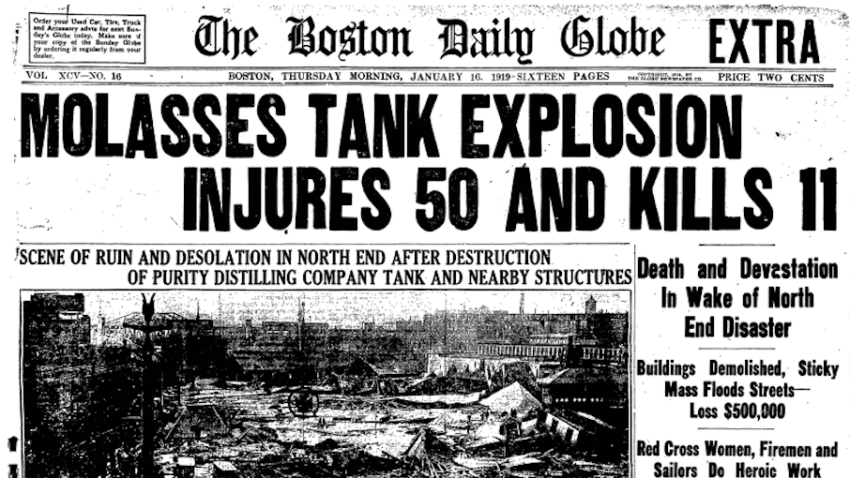
January 15, 1915, started off as a warmer than usual day. People were out on Commercial Street, Boston. They were moving about and enjoying the slightly warm January day. Children were playing outside on the streets and workers were stepping away from their jobs for a brief lunch break.
They did not realize the danger they would soon be facing. Tons of molasses would pour through the streets of Boston around noon. None of them knew that in just a few minutes some of them would be dead. Others would struggle to survive in a city covered in waist-high molasses. It would change quickly from being just an ordinary day to become the most deadly horrifying day in Boston’s history.
This is the news headline the day after the flood. 11 are announced dead in the headline, but 10 more bodies would be found later.
First World War Ends, Prohibition Set to Begin
Molasses became an important ingredient in creating ethanol during the First World War. This ethanol was used to create ammunition and explosives. The war ended. The American Congress then sought to make any form of liquor or alcohol illegal. They did this with an act of Congress called Prohibition.
Purity Distilling, therefore, was holding tons of molasses in a large storage tank in Boston. The company sought to make as much liquor as possible before Prohibition took effect. Shifts at Purity Distilling operated around the clock. They produced as much high-grade rum as possible.
Giant Tank Holding Millions of Gallons of Molasses
The molasses storage tank had been built a short time earlier just as the First World War was ending. It was a huge tank measuring fifteen feet high and one hundred sixty feet wide. When filled to the limit it held 2.3 million gallons of molasses.
The tank had been built near the harbor. Ships could dock there to unload the molasses. Railroads were close by to ship the molasses to where it would be made into alcohol. On Jan 15, 1915, it was filled almost to its limit. It was straining to hold the massive amount of molasses.
Tank Explodes, Molasses Flows
Close to noon people began to hear louder than usual noises coming from the tank. Survivors would later report that they heard loud rumbling noises. These were followed by loud pops which sounded like machine guns being fired. The metal steel rivets caused these noises. They held the sides of the tank together and popped out in rapid succession. Molasses began flowing from the tank at 25 to 35 miles an hour. Anyone in its path had no chance to escape.
Chaos and Destruction and Death Follows
The flood of molasses swept through the streets with such force. It literally slammed buildings off their foundations. It knocked over horses, cars, wagons, people, and anything else that got in its way. Horses and people were caught in the sticky goo. The molasses quickly hardened once it was out in the cooler air. This made it impossible for anyone trapped in it to move.
The molasses (which was a high wave) at that time knocked people and children to the ground where some suffocated to death. Twenty-one people died in the molasses while another one hundred and fifty were Injured. Property damages were enormous and if this had happened in modern times the price tag would be near $100,000,000.
Rescuers, including the police, local volunteers, and the Red Cross, all responded quickly to the disaster. They found it hard to walk through the molasses, which was up to their waists in some places. The molasses would cling to their boots and clothing making it hard to walk as they searched for survivors.
What Caused the Tank to Explode
No permit was required to build the tank.
It was poorly designed.
Poor construction and materials.
Leaks were not repaired, and molasses dripped.
The tank was painted brown to hide the leaks and drips.
Molasses would ferment causing pressure to the inside of the tank. This would be like putting too much air or gas in a balloon, which would cause the balloon to pop.
It was built very cheaply and quickly built with no safety inspections.
Was never properly tested by using water to find and repair leaks.
Lawsuits Become the First Class-Action Lawsuits
Victims of the molasses flood and the families who were victims of the flood soon filed lawsuits against Purity Distilling. These lawsuits soon combined to make one massive lawsuit, becoming the first-class action lawsuit for the state of Massachusetts. Finally, in 1926 the victims were awarded $300,000. This resulted in new laws enforcing higher regulations and inspections for new construction.
The tank that held those deadly gallons of molasses would never be rebuilt. Today, a recreational complex has been built in its place. More than a hundred years have passed since the molasses flood. People who live near the site still claim that the smell of molasses lingers on really hot days.
Johnstown, PA, is a small town in Cambria County in the southwestern area of the state. Pittsburgh is about seventy miles to the east of Johnstown, which lies in a small valley of the Laurel Mountains. Pittsburgh and nearby Johnstown were once booming steel towns.
A Day Starts Like Any Other DayIn Johnstown, Pa
On May 31, 1889, heavy rains had been falling, and as the people of Johnstown rose and went about their daily lives, they had no idea that by that afternoon, their small town would be hit with twenty million tons of water, which reached nearly thirty-seven feet high.
As many as twenty-two thousand would lose their lives and properties. The flood that was about to hit them would devastate their small town and their families and leave behind millions of dollars of damage.
A Dam Built for Canals
It all started in 1852, when the state of Pennsylvania built a huge water reservoir about eight miles east of Johnstown. The dam was built in connection with the Pennsylvania canal system, but within a few years, railroads became the more modern way of shipping, and the canal system became obsolete. In 1863, the canal which had connected Johnstown and Blairsville was shut down, eliminating any further use of the water reservoir.
The dam sat there with very little maintenance, and one portion began to erode in 1862, just ten years after the dam had been built. What repairs were done were done using inferior materials to fix holes and leaks. The workmanship was also done in a sloppy manner.
Rich Business Men Buy The Dam
The dam was first sold to the Pennsylvania Railroad as trains at that time ran on steam, so this was a good place for a water stop. In 1875, a one-term Pennsylvania congressman named John Reilly bought the dam and surrounding areas for $2500.
In 1879, Reilly resold the dam to a real estate salesman named Benjamin Ruff, who intended to turn the reservoir into a lake and a resort for the wealthy. He became the first president of an exclusive club known as the South Fork Fishing and Hunting Club. This club’s members would include wealthy doctors, dentists, lawyers and rich businessmen such as Andrew Carnegie and Henry Frick.
After a busy week in nearby Pittsburg, these gentlemen and their families could take the train and enjoy a weekend of relaxing at a private resort area. Some cottages and cabins were built, as well as a gentlemen’s clubhouse.
Lack of Oversight and Management
When Benjamin Ruff and the South Fork Fishing and Hunting Club took over the dam, they did attempt to do much-needed repairs on the dam. However, the repairs needed were probably much more extensive than Mr. Ruff and the South Fork Fishing and Hunting Club had anticipated, and I would guess that some of those repairs were put on hold.
The club also installed fish screens which, due to the heavy rains, ended up catching debris and forcing the water over the top of the dam. So basically, the heavy rains on May 31, 1889, combined with the lack of proper repairs and maintenance, were the culprits of the Johnstown Flood in 1889.
The Monster Flood Roars Toward Johnstown, PA
The heavy rains on May 31, 1899, put too much strain on the dam, and that afternoon workers at the dam saw that it was not going to hold the water back. Telegrams were sent to the small communities and to Johnstown. Most people paid little attention to the flood warnings, while others did move their belongings to second stories. None had any idea of the monster that was about to hit their small town and take their homes and lives.
At sometime around three o’clock in the afternoon, the dam gave way and the water came roaring furiously down into Johnstown. It was a roaring wall of water that took everything in its path. Houses, animals, cars, railroad cars and humans, the water showed no mercy. Thousands were trapped with no way out. Some were swept away, while others were caught in the tangled mess of houses, trees, and debris that backed up at the Stone Bridge.
For some reason, this debris at the bridge ignited and killed the people who had been clinging to wood boards or whatever they could manage to hang on to.
Relief Efforts
Just like today, when disasters of this nature strikes, Americans rally for each other and the flood of 1889 was no exception. Donations, volunteers and help came pouring in from all over the United States. Donations came from major cities in the United States such as Boston, Cincinnati and donations came from overseas as well. Money came from other countries such as London, Ireland and from Australia and there were numerous donations from many other places. Various businesses donated materials to help rebuild homes and shelters for those who had lost their homes.
Clara Barton arrived within days of the flood, and along with her American Red Cross organization set up headquarters in one of the few buildings that had survived the flood. Here the Red Cross sat up regular food areas to feed the homeless. Clothing areas were set up to distribute needed shoes, clothing, blankets and personal care items. This was one of the first biggest disasters to hit in America with such force that it proved to be training for disasters that would occur in the future. Lessons learned during the Johnstown flood of 1889, have carried over to modern day disasters.
Clara Barton set up headquarters in Johnstown, PA, after the historic flood of 1889.
Andrew Carnegie Library
Andrew Carnegie was one of the richest members of the South Fork Fishing and Hunting Club although it is thought that he spent very little time there. Carnegie was also well known as a kind and generous man.
Shortly after the flood he visited Johnstown and donated $10,000 toward building a library there. More money was later needed to finish building the library and Carnegie donated an additional $45,000 toward its completion.
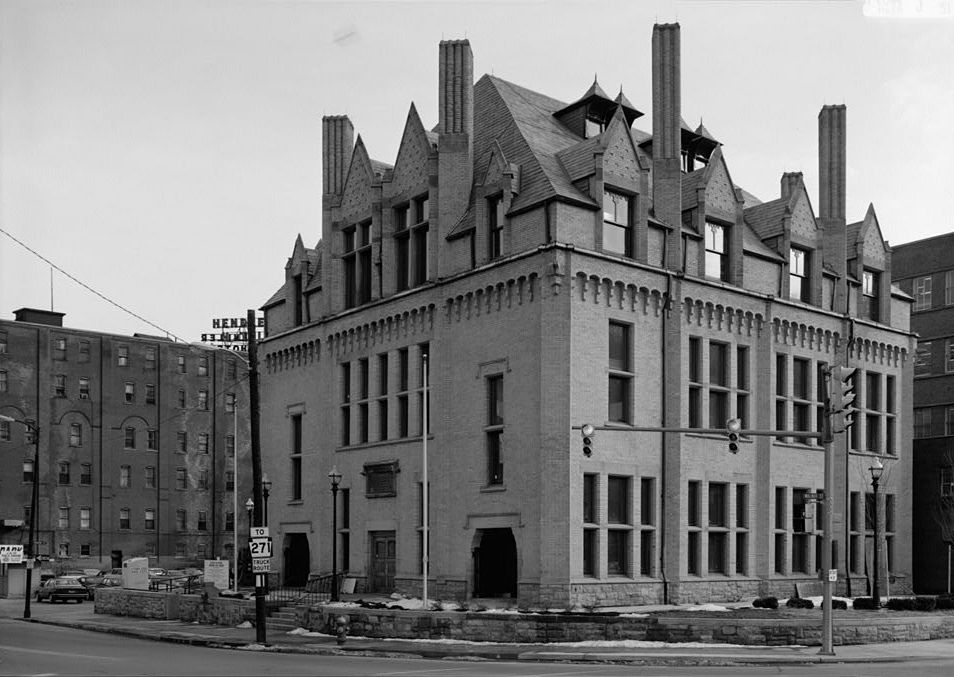
The Cambria Public Library built in Johnstown with donations from Andrew Carnegie
A Flood for the History Books
The Johnstown Flood was an historical event that people still talk about today. Stories and pictures of the flood have been preserved and handed down to new generations. There are still different theories of just who or what was responsible for such a horrific event that caused so much damage and took so many lives, many of them children. Johnstown has an interesting museum dedicated to the flood where the history of the Johnstown Flood is kept alive. The museum features a short film about the flood. After the flood, there were very tiny homes brought into Johnstown, much like FEMA trailers today, for families who had lost their homes. One of these tiny homes is also part of the museum.
The South Fork Hunting and Fishing Club and some of its members were sued in court but were never held responsible. Today life goes on in Johnstown, PA, and the town has been rebuilt but the memories and stories live on.
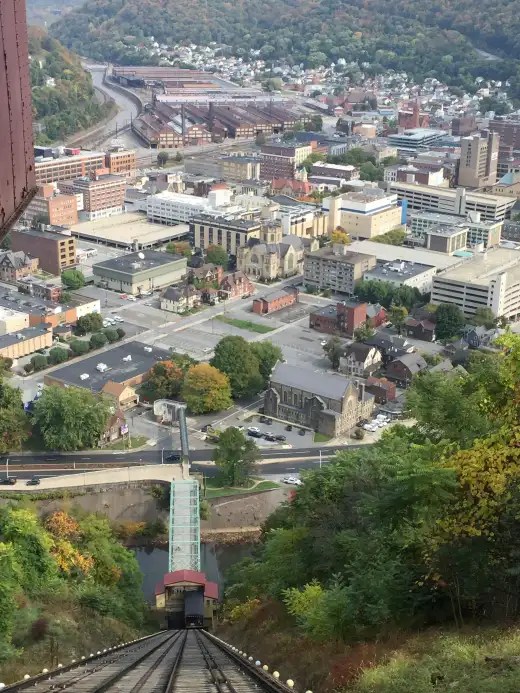
Johnstown has come back from the famous flood of 1889. This is a photo of Johnstown in November of 2020. Photo Credit L.M. Hosler
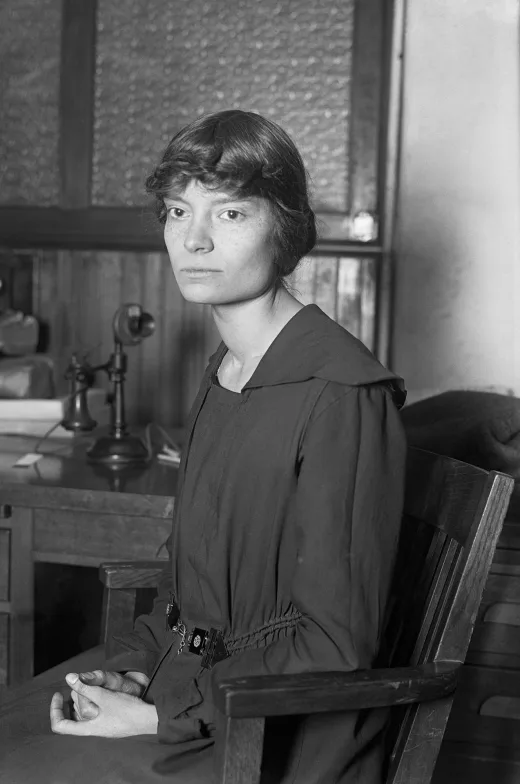
Dorothy Day was born as one of five children to John and Grace Day in Brooklyn, New York on November 8,1897. Her father was a sports writer and later became a sports editor. A few years after Dorothy’s birth he moved the family to San Francisco, California to take a better job. The Days family lived in California until the Great Earthquake in 1906 which destroyed her father’s place of employment. Before they left California Dorothy and her mother tried to help those who had been left homeless from the earthquake. This probably influenced Dorothy in such a way that years later it became her life’s work to help others in need.
The Day family then moved to Chicago, Illinois and lived in one of the poorer sections of Chicago until her Father found work that allowed him to move his family to a better neighborhood. Dorothy never seemed to forget what it was like to be poor and perhaps that is what led her to make the choice of helping the poor and less fortunate.
College Years
While still living in Chicago Dorothy won a scholarship which allowed her to go to The University of Illinois and she attended there for two years from 1914 until 1916. Dorothy loved reading and learning and she especially enjoyed reading the works of Dickens and Poe as well as others. It was at the university that her journalistic career began when she went to work for a small local paper. The friends she chose while in college were generally socialists who influenced her to join the Socialist Party. With her friends she became involved with radical causes concerning poor working people.
Life as aNew York Reporter
Two years later, she gave up her studies at the university and moved to New York. She was just eighteen years old at the time. Here she found her first real job as a reporter working for the New York Call where she worked for a few months before leaving The Call to work for The Masses. As a reporter she covered labor meetings, protests and riots as well as other social causes. Here in New York, she made friends with other journalists, liberals, socialists, labor collaborators and communist that she met through her work. During this time, Dorothy was like most young women, enjoying life, her first relationships with men and love. She also became pregnant during this time period and she chose to have an abortion rather than raise the child
Occoquan Prison:The Night of Terror
While working as a reporter for The Masses, Dorothy traveled to Washington, DC to join with a women’s suffrage protest organized by Alice Paul, Lucy Burns and The National Women’s Party. As a result, Dorothy and several of the other women were arrested and spent several weeks in jail. Dorothy asked for and was given a Bible which she took much comfort from. After being arrested and sentenced to thirty days in jail, Dorothy and the other women went on a hunger strike which drew the attention of President Woodrow Wilson who ordered the women to be released from jail. Later these women dubbed their time in the Occoquan Prison as “The Night of Terror”.
Love and Heartbreak
n 1918, Dorothy thought it was time to look for a possible new career and tried nursing by enrolling at Kings County Hospital in New York. It was while she was in nurse’s training that she met and fell in love with a fellow newspaper associate, Lionel Moise. She became pregnant with his baby which he insisted that she abort, so in an attempt to keep the man she thought she loved she had the abortion. She was only 21 at the time. Dorothy often stated how deeply she regretted making that decision because within a short period of time Lionel had walked out and left her anyway.
After Lionel walked out Dorothy was heartbroken and she married Berkely Tobey on the rebound. The two of them traveled for some time together but the marriage was a brief one and ended in divorce shortly afterwards. After divorcing Berkely Tobey, Dorothy entered into a relationship with Forster Batterham for several years and became pregnant for the second time. To Dorothy, this was a miracle because she had believed that she could not have children after having the abortion. She gave birth to a daughter she named Tamar Theresa on March 4,1926. This was the beginning of the end of her relationship with Forster who had not wanted either marriage or children and soon after the two went their separate ways.
The Beginning of a Lifetime of Serving God
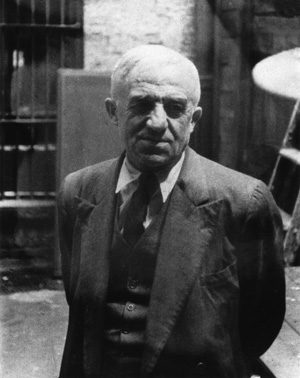
Between 1932 and 1933, Dorothy met Peter Maurin an illegal immigrant who was also a scholar with leanings toward the catholic faith. On May 1,1933 the two of them published their first issue of The Catholic Worker and began focusing on their mission of promoting Biblical teachings, morals, mercy and justice, which was also committed to forming a nonviolence peaceful society. Together these two would work for social change, better working conditions for workers and help and comfort for the poor.
Achievements of Dorothy and Peter
Started the newspaper (The Catholic Worker
Opened the first House of Hospitality in 1933
Started farming communes for people in need who could live on the commune and help to raise food and animals to meet their needs
Peter Maurin, Dorothy’s close friend and co-founder of the Catholic Worker’s Movement
Books Written by Dorothy Day
The Eleventh Virgin
From Union Square to Rome
House of Hospitality
On Pilgrimage
The Long Loneliness
Selected Writings
Loaves and Fishes
The Reckless Way of Love (notes on following Jesus)
The Duty of Delight
All the way to Heaven
Peter Maurin Apostle to the World
Dorothy Day and the Catholic Worker
Meditations
In My Own Words
This is a short list of the books that Dorothy Day wrote. She also wrote over three hundred articles for various newspapers that she worked for over her lifetime. Many of her books are books of faith and stories of how she spent her lifetime and her faith in service to others.
Dorothy Day Honors and Achievements
Dorothy achieved so much that it is hard to comprehend everything this woman did but this is a short list of some of the most memorable events of her life.
Dorothy had the honor of meeting Mother Teresa in 1970. It’s believed that Mother Theresa gave Dorothy one of her crosses
Received Communion with the Pope 1967
Received birthday wishes from the Pope on her 80th birthday in 1977
University of Notre Dame honored her with the Laetare Medal which is given for outstanding service to the Catholic church and society
Dorothy had a long and deep impact on the Catholic church
This is only a few of the achievements and honors that Dorothy received during her lifetime.
In Conclusion
Dorothy Day was a determined and courageous woman who found her faith and her strength in the Catholic Church. Upon finding her faith, she worked hard and tirelessly for the poor. She gave more of herself than most of us are capable of. She was jailed several times in her efforts to help women fight for their rights in addition to other causes that she felt strongly about. She spent most of her adult life serving her God, her church and her fellow human beings. Let us all strive a bit harder to be more like Dorothy Day and make the world a better place. A world more like Dorothy Day’s vision of caring and loving our fellow human beings.
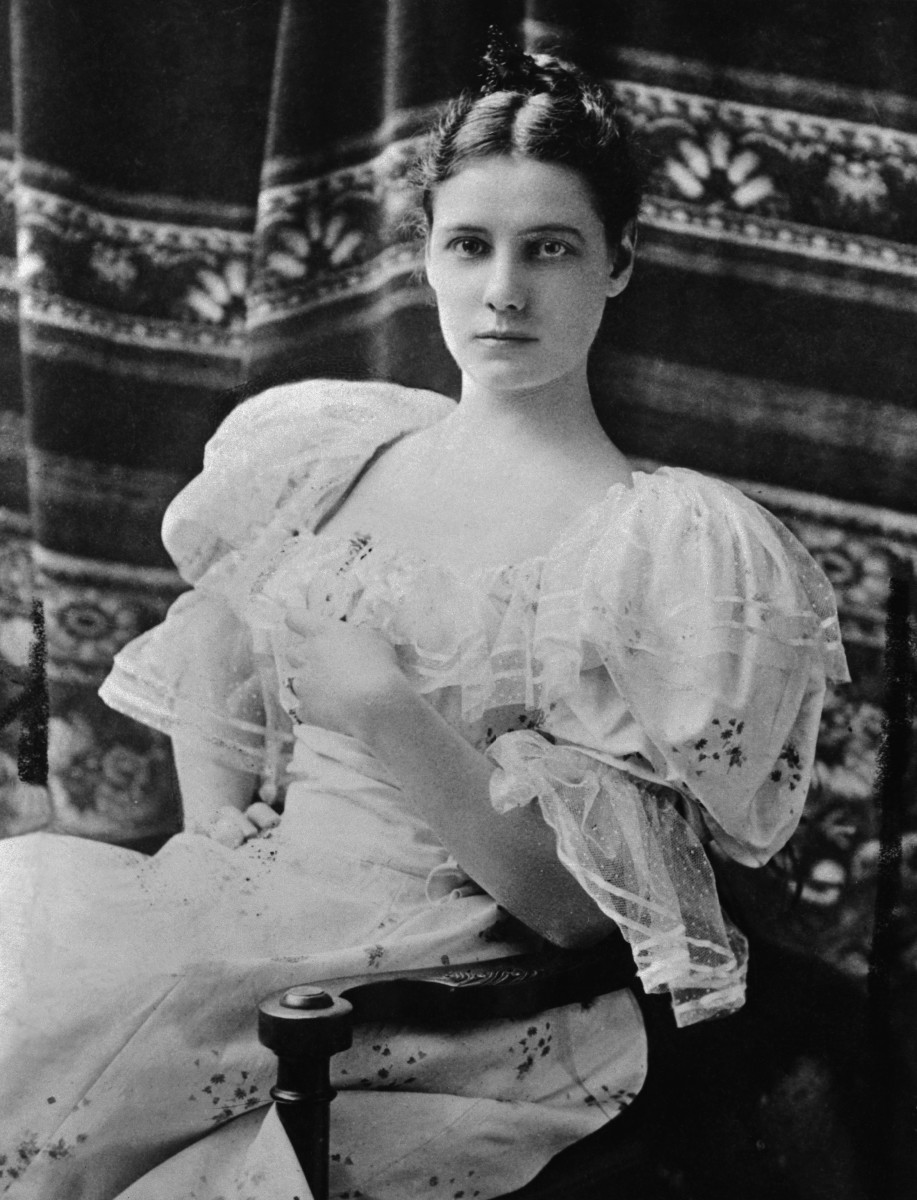
Nellie Bly was born in 1864 in Cochran Mills, Pennsylvania at a time when women were expected to stay at home, have babies, take care of their men and be happy doing that. Women had very few rights at that time, little education and they rarely had good career choices. Nellie was born into a large family of fifteen. Her father had ten children before he married Nellie’s mother, who then gave birth to another five children. Nellie was named Elizabeth Jane but was also nicknamed “Pink or Pinky”. Later when she began her career as a newspaper woman, she changed her name to Nellie Bly as her pen name. Nellie’s father died when she was six years old and the family fell into hard times. Her mother remarried but it is said that her new husband was abusive. Sometime later her mother divorced the stepfather leaving Nellie and her mother to support the family by operating a boarding house just outside of Pittsburgh.
Nellie had wanted to become a teacher and briefly attended the Indiana Normal School, now know as Indiana University of Pennsylvania. However, the family’s finances forced her to give up her teaching dream. It was at this time that Nellie left school to help her mother run the boarding house but she still had dreams of what she wanted to do with her own life.
Nellie Begins Her Career as a Reporter
Nellie began her career as a writer and reporter in 1885 at the Pittsburgh Dispatch newspaper. She had written an angry letter to the paper’s editor in response to an article that she felt disrespected young girls and women. After reading Nellie’s letter, the editor offered her a job working for the paper. Very few women were ever offered opportunities like this and Nellie quickly accepted the offer. She was generally given assignments that were considered of interest to women. Here Nellie could give a voice to issues that concerned women such as poor women who had to support themselves as well as the working conditions these women found themselves in. Of course, some of her articles didn’t sit well with the business class and this was the reason she was reassigned to writing just for the women’s page such as society news. Nellie soon grew tired of these boring assignments and wanted more of a challenge. She found her challenge by going to Mexico as a foreign correspondent for the paper where she spent several months writing about the lives and conditions she found in Mexico. After a few months however, she drew the displeasure of the Mexican dictator Porfirio Diaz when she wrote articles critical of his leadership and government. Nellie was forced to leave the country but later she published her book “Six Months in Mexico”. It seems Nellie’s honesty as a reporter was not always appreciated and tended to get her into trouble.
Nellie Exposes the Insane Asylum Blackwell Island
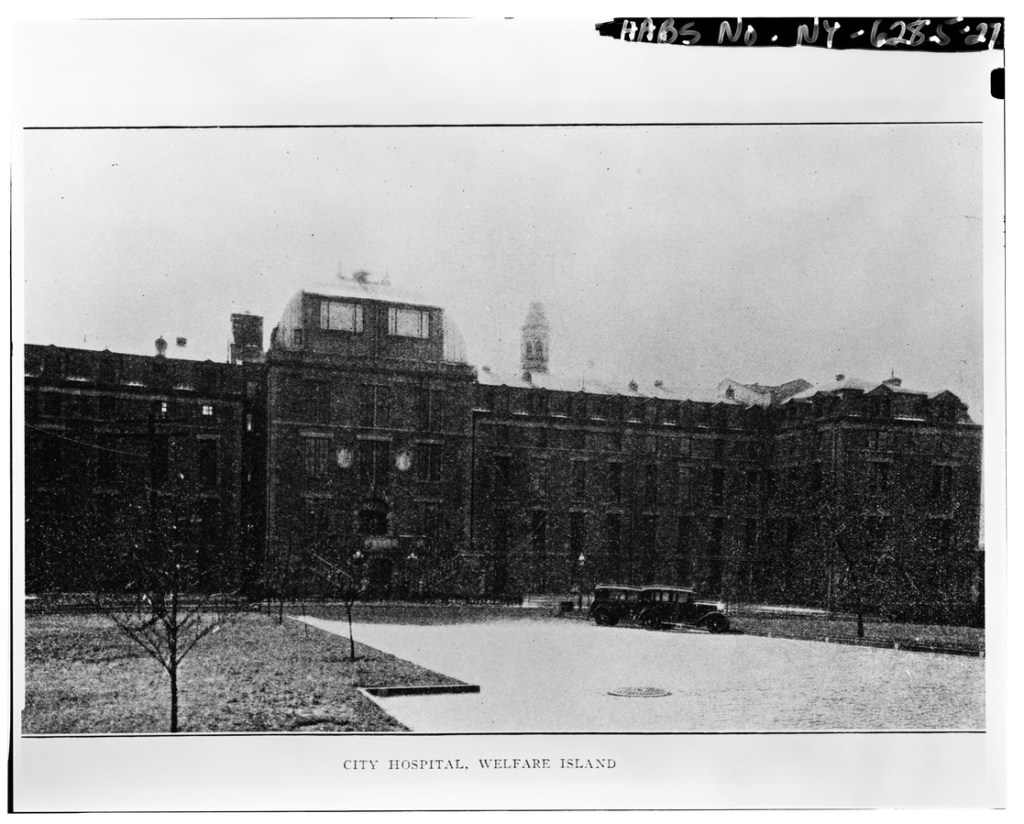
In 1887 Nellie decided it was time to move to New York where she took a job at The New York World paper as a reporter. Her first real assignment with the New York World paper was to go undercover as an insane girl to the Blackwell Island mental institute. How many of us would willing have ourselves committed to an insane asylum? Not very many of us I am sure. Here she spent ten days living locked up with insane women. She saw and experienced everything that a truly insane person would experience. As a result, she wrote a series of articles exposing the mental health facility and she was able to bring about awareness for the mentally insane and instigate an investigation into Blackwell Island. This brought about much needed reforms for mental health institutions. Her story of her time in the mad house later became the movie, “Ten Days in a Mad House”. It was an awesome movie but I believe it was rather dramatized as they tend to do with movies.
Some of the reforms that were brought about by Nellie’s daring venture into Blackwell Island institute for the mentally insane included:
Better food for the patients
Better health care
Warmer clothing and more blankets
More oversight into the doctors and nurses treatment of the patients
Warm baths instead of icy cold baths
Cleaner clothing, towels and personal care items
Blackwell Island for the Mentally Insane Asylum
The Blackwell Mental Institute for the insane where Nellie Byl spent confined for ten days
Nellie Travels the World in Seventy Two Days
Nellie also had the opportunity to travel around the world to beat the previous fictional world record of eighty days. When Nellie brought up the idea of beating the old record her editor told her it wasn’t a job for a female so Nellie challenged him to send both her and a man at the same time. Her editor gave her the assignment. She left Hoboken, New Jersey on Nov 14th, 1889 by ship, traveling to London. From London she took trains to Paris and throughout Europe. From there she traveled to Egypt then on to the Suez Canal then headed towards Middle Eastern countries. From there, she next journeyed through Asian countries and into Japan. From Japan she headed home to San Francisco, Ca. Her journey consisted mostly of travel by trains and ocean liners but there are also reports of various other means of transportation such as horses and Asia rickshaws. Nellie completed her journey in record time with a total of twenty one seven hundred and 40 miles in seventy days, six hours and eleven minutes. I am not sure Nellie was aware at the time she began her journey that the Cosmopolitan magazine was also sending another female reporter, Elizabeth Bisland, on the same mission.
During those seventy two days as Nellie traveled the world, the editor of The New York World used her trip to drive up circulation of the newspaper. Nellie would send dispatches to the paper on where she was every day. The newspaper sponsored a contest offering a prize of a trip to the person who made the most accurate guess as to how long her trip would take.
Upon her return arrival in San Francisco on Jan 25th 1890 Nellie was greeted with crowds of admirers and was given a special train to make her trip back to New York. When she arrived in New York she was honored with parades, brass bands and fireworks to celebrate her victory and safe return. She later wrote her book titled “Around the World in Seventy Two Days”.
Nellie’s Many Accomplishments
Nellie Bly was certainly a woman ahead of her time. In a time when women were looked on as nothing more than a wife, mother, housekeeper and laundress, she blazed a path of her own. In 1895 Nellie married Robert Livingston a man quite a bit older than her. After his death, Nellie wrote numerous articles covering the women’s suffrage movement. Her words and her stories were a powerful tool for women everywhere. Nellie also covered the First World War reporting from the Eastern front lines. Nellie received numerous awards for her work throughout her lifetime and she certainly left her mark on the journalist world. In 1998 Nellie Bly was indicted into the National Women’s Hall of Fame.
Nellie Bly was a leader whose work influenced women’s lives in many ways. Her early work exposed factories and influenced changes in safety. She became a role model for young women who dreamed of becoming something more than a wife and mother.
The White Queen novel is written by Philppa Gregory, a historian with a keen interest in English kings and queens. Philppa Gregory combines her love of history, writing and researching into this compelling story of Elizabeth Woodville, the daughter of a squire and a young widow with two young sons. This is the story of one young woman’s rise to the height of power, her fall from power, her struggles to save her children and the love she has for King Edward IV. The book is well written and Philppa Gregory does a great job with researching any of her books. Although it is fiction, it is based on real people’s life’s and real events that occurred during their lifetime.
This is the story of great royal families fighting for power and the throne of England as the greatest prize of all. Many of these great families would fight against their cousins in a war that became know as “The War of The Cousins” and later known as the War of The Roses. This was a time when friends, cousins and brothers could turn on each other in the middle of a battlefield in a moments notice.
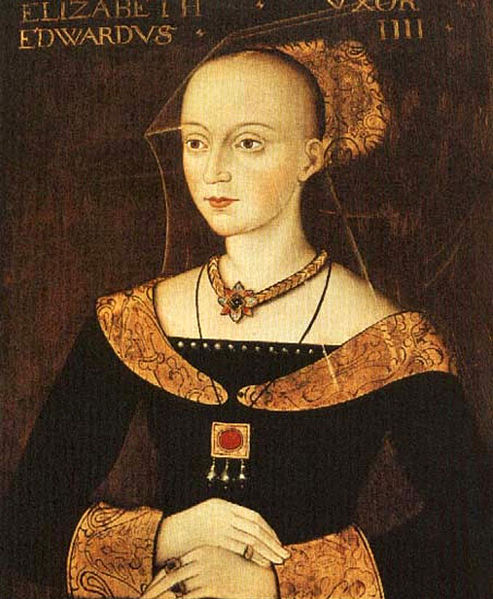
Queen Elizabeth Woodville
Elizabeth’s Story
Elizabeth Woodville was considered to be a commoner and not good enough to marry a king, even though her mother Jacquetta of Luxembourg came from the royal family of Burgundy and had been married to the Duke of Bedford. Elizabeth’s father however, had been merely a squire in the Duke’s service so Elizabeth had no real prospects of a royal marriage. She was also the young widow of Sir Thomas Grey and had two small sons.
Elizabeth waited alongside the roadside hoping for a chance to petition the king to have her land returned to her. When the young King Edward saw her waiting alongside the road with her two boys he was instantly captivated by the beautiful lady. Edward attempted to make Elizabeth his mistress but she firmly refused, she would settle for nothing but becoming his wife and his queen. They soon married in secret and against the wishes of his top advisers and counsel who were hoping to make a match with a princess of France and King Edward.
Elizabeth is soon anointed as Queen Elizabeth. Through her new husband begins to move her many family members into positions of power and wealth through marriages, which infuriates Edward’s great friend and mentor the Earl of Warwick. The Earl of Warwick schemes and brings about an uprising in which he tries to have Edward’s younger brother George made king and put on the throne.
This is only one of the many uprisings and rebellions that King Edward and Queen Elizabeth faced as they ruled England and their own family grows. There would be many battles and much blood shed as the royal couple fight to stabilize England and keep the throne for their sons.
Elizabeth’s Young Sons: Heirs to the Throne
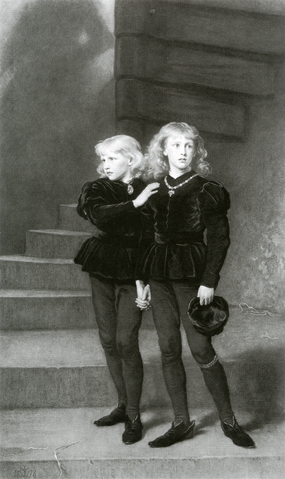
Elizabeth came birth to several daughters and two sons who were the heirs to the throne after their father King Edward. King Edward, unfortunately dies while the two boys were too young to be named king. Edwards younger brother, Richard took the throne instead and the two young heirs were sent to live in the tower. One of the greatest mysteries in the story of Elizabeth Woodville, is the story of the two sons who were imprisoned in the tower and disappeared with no trace and no bodies were ever discovered. To this day, no one knows what really happened to the two young princes, Rumors were that King Richard had the two boys murdered so that he could be crowned king. However, there were several others who could have murdered the boys or given the order to have them killed. The author of The White Queen, gives a different theory on what may have happened to the heirs to the throne. The boys disappearances have never been solved and their killers were never found.
Reasons I Recommend Reading The White Queen
I have read several of Philppa Gregory’s books and I have loved every one that I have read. She uses actual people, dates and events to tell a fascinating story. Every book has been a page turner and hard to put down. In this story of The White Queen she describes battles, conflicts and emotions that I felt as if I were transported back time and as if I were right there in the middle of all the conflict. Thank goodness I was only reading about these treacherous and bloody times.
I personally love this type of story because of the history and that I know these things actually happened and people lived these stories.
I recommend this book for many reasons
If you are like me and like stories base on history you will enjoy this book
For those who like action to keep your interest there is lots of action detailing many of the battles of the War Of The Cousins
Romance: Who wouldn’t like a love story involving the King of England who marries a squire’s daughter just because he falls in love with her even though she has no title or great wealth or power
It is an intensely emotional story as Elizabeth the mother of the princes in the tower fights to save her sons
Because the characters are based on real people, they seem very real
I would encourage anyone to read the story “The White Queen” by Philppa Gregory. This story has also been made into a television mini series which is very good. Philappa Gregory also wrote “The White Princess” Which is the story of Elizabeth’s oldest daughter and her marriage to Henry VII. The White Princess has also been made into a television mini series.
There is no doubt about it, everyday we hear so much violence on the news. It seems our society is becoming more violent with each passing generation. We, as parents, grandparents and society in general have an obligation to try to stem the tides of violence. So where do we start? Our government wants to take away our rights to own firearms. They also want to remove our ability to protect ourselves. They think the solution is gun control. But most of us, know that if a criminal wants to inflict violence on others, they will find a way. They may choose to steal guns. Recently, there have been cases where they used various other weapons. These include knives, ropes, bricks, hammers or rocks.
We know that mental illness plays a role in most cases of violence. But, here again, there are many who suffer from some form of mental illness, who would never harm someone else. But suppose a slightly mentally ill young person grows up viewing violence every day. They see this violence in their television programs, movies, and video games. Would that make the chances of that person committing a violent act increase? If they view this every day, does it not distort their thinking and reasoning ability? If a mentally ill person views violence as a way of life, do they choose violence? Do they use it when they have issues with others? Is violence their method of resolving conflicts?
Children Learn Violence
Most children are not born with violent tendency, except for certain mental illnesses. They learn what their surroundings and those people around them teach them. A National Television Violence Study project was done by the government nearly twenty years ago. The studies results showed the following.
Children learn aggressive behaviors
Children who watched a lot of violent television and movie content seemed to lose their empathy towards others
Some children would develop fears of becoming victims of violence
Yes, children do learn from watching violence on television. A friend of mine has the scar to prove it. Her brother, after watching cowboy and Indian shows decided to try to scalp my friend with his pocket knife. Of course, in this case, the child was punished and made sure he knew what he had done was wrong. My own son, after watching a show called Circus of The Stars, decided to try to ride his bike over his younger brother. These are just two example of how children react to what they see on Television.
Hero Or Nasty Villain
We have all watched movies where the hero did some very extreme acts of violence himself. However, the hero is shown as being glamorized and his actions are excusable in his efforts to destroy the villain. The villain is portrayed as so evil, that any violent acts the hero does is justifiable even if the hero has killed, harmed or damaged just as many people as the villain.
Now movies, and television drama shows would be very dull without some sort of conflict, I agree. But, do they have to show in graphic detail, blood and body parts flying? I think not. Movies were just as good years ago, without having to see blood smeared and detached limbs and heads.Some of these shows, movies and video games are so graphic that children are growing up seeing blood splatter that it has no effect on them and it doesn’t seem to bother them. In fact, to them this is exciting and normal. Some movies I have watched recently have shown people being tortured or being beaten so badly, that I had to turn off what might have otherwise been a good movie. In fact, it was a remake of Bonnie and Clyde, but it was so much more violent than the original, which was quite violent enough.
Everyone Can Help Change The Violence
All of us have the ability to help to curb violence in the media and protect our young people from its harmful effects. Here are some tips that may help parents or caregivers of young children.
Know what programs your child is viewing and what video games they are playing.
Watch with your child the games they are playing and the television programs they are watching
Limit the amount of time the child is allowed to play games or watch television
Make use of the time you spend watching television programs by discussing how this is not what reality is
Talk about the violence and let your child know it is not reality and there are consequences to violent behavior
Change the channel and explain why you are doing so
Refuse to watch overly violent shows or movies
Talk with other parents and encourage them to avoid violent games, movies and television programs
Also discuss with other parents if there are violent games or shows you do not wish your child to be exposed to. Chances are they may agree with you.
There are groups that try to curb violence that children are exposed to. Join one and make a difference
Most televisions have parental controls which can be used to help eliminate viewing violent and sexual content. Be sure to use these controls
Join groups that work towards curbing violent games and television
The Good Things
Yes, there are good programs on television and good movies. It is just getting harder to find good family type movies. There are some good educational channels, such as the History Channel, and some good family movies can be found on the Hallmark Channel. Teach your children to look for the good and protect them from being overly exposed to the violence. Hopefully, our society may change its course amid all the violence and eventually hold the entertainment industry accountable for what it produces.













 History Lovers Corner