

The Horseshoe Curve located near Altoona, Pennsylvania was designated a National Historic Landmark in 1967. The Horseshoe Curve draws thousands of visitors daily to view the engineering achievement of John Edgar Thomson. It’s history as well as it’s breath taking scenery, makes it a popular tourist attraction. It is especially beautiful in the fall. That’s when the mountains are showing off their trees with leaves of colorful red and gold.

In the mid 19th century, railroads were beginning to provide easy fast transportation. The railroads were becoming valuable to business and industry as a way to move people and products. Pennsylvania and the Pennsylvania Railroad were looking for a way to ship those products and supplies west. However, the Allegheny Mountains stood tall and was impassable for trains.

On February 15, 1854, the Horseshoe Curve opened for travel. It solved the problem of the Allegheny Mountains. It allowed passage from Harrisburg to Pittsburgh in both directions. This allowed passengers and goods faster transportation. From 1854, the Horseshoe Curve was a bustling, busy place. Freight and passengers could now travel quickly to the west or the east coast.
In fact, the HorseShoe Curve became a major, important railway system for supplying troops in World War II. it carried supplies, heavy equipment and troops to the east coast. From there, the supplies and troops were sent to Europe on ships. The Horseshoe Curve gained Hitler’s attention and he planned to sabotage several vital areas in the United States. Destroying this major transportation hub would help to cripple the flow of troops and supplies to Europe. The Horseshoe Curve was just one of Hitler’s targets.
Hitler gave orders to recruit young men who spoke English and were possibly familiar with areas of the United States. These young men were sent to a training camp near Berlin on an estate named Quentz Lake. They were taught various sabotage tactics, shooting, fighting, explosives and throwing hand grenades.
On Saturday, June 13. 1942 a submarine coasted underwater and landed just a hundred miles from New York. George John Dasch and three other men left the submarine on a beach with instructions on specific targets to sabotage. Horseshoe Curve was on the list of targets. The plan was to make it to New York where the Hell Gate Bridge was also a target. The list of targets also included the New York Water Supply and Newark Penn Station.
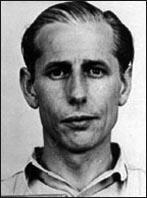
Unfortunately, for Dasch they landed near a United States Coast Guard station. Although they were not apprehended at that time, the coast guard was suspicious and started a search of the beach. They quickly came across tracks that led them to where the Nazis had buried their supplies in the sand. Those supplies included explosives and other sabotage related materials. They promptly notified the FBI and other authorities.
Dasch and his three other saboteurs, Ernest Peter Burger, Heinrich Heinch and Richard Quirin all made it to New York. Dasch was having cold feet and so was Burger. There equipment had been found and was of no use to them now. Just two days after landing in the United States, Dasch made a phone call to the New York FBI. He then went to Washington, DC where he was arrested and questioned. Dasch agreed to work with the FBI and supplied them with information about the others he had come ashore with. He also supplied information about another group of Nazis who had landed in Florida. On June 20th, the other seven saboteurs were arrested through the information he provided.
CREATOR: gd-jpeg v1.0 (using IJG JPEG v62), quality = 98
Military Trial
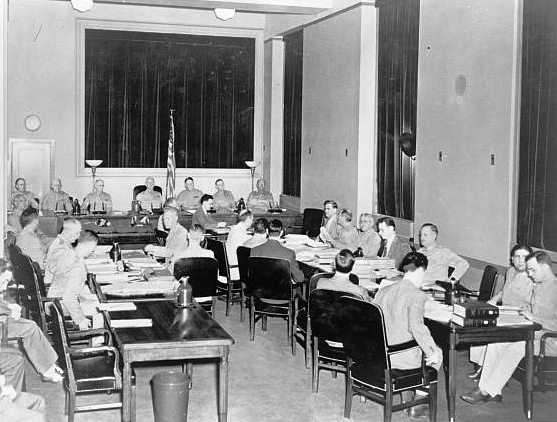
On July 2, 1942, President Roosevelt ordered a military tribunal. The court was to try all eight men who had planned sabotage against the United States. Attorney General Francis Biddle and Judge Advocate General Cramer presided over the trial. They were assisted by seven military officers.
August 3, 1942 all eight men were found guilty. Six were sentenced to death. Dasch and Berger were given life sentences due to their assistance with the FBI. The military insisted on using these six men as examples. They wanted to ensure that Hitler and his Germans would not be eager to try sabotage against the United States again.
August 8,1942 Six of the Nazi plotters were put to death in the electric chair. All were buried at Potters Field, Blue Plains, D.C. In 1948 George John Dasch and Ernest Peter Burger were released from prison and returned to Germany.
Thus the death of these six men ended Hitler’s plans of invading and blowing up critical manufacturing, transportation and water systems in the United States.













 History Lovers Corner