Writers are important but so are readers. Readers and writers need each other. Writers provide their audiences with news, valuable information as well as entertainment.
Alexander Graham Bell in 1876 was the first person to patent a new invention known as the telephone. For many years the Bell telephone company would bear his name. Today in some areas the Bell telephone service is still in existence. Telephones have certainly become quite different from the original first telephones. We have moved from phones that were hard to hear on to smart phones that can function as a small computer that we can carry in our pocket or our purse.
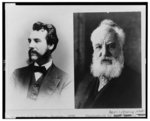
Photos of Alexander Graham Bell as a young man and as an older man.
Some Photos of the Earliest Phones
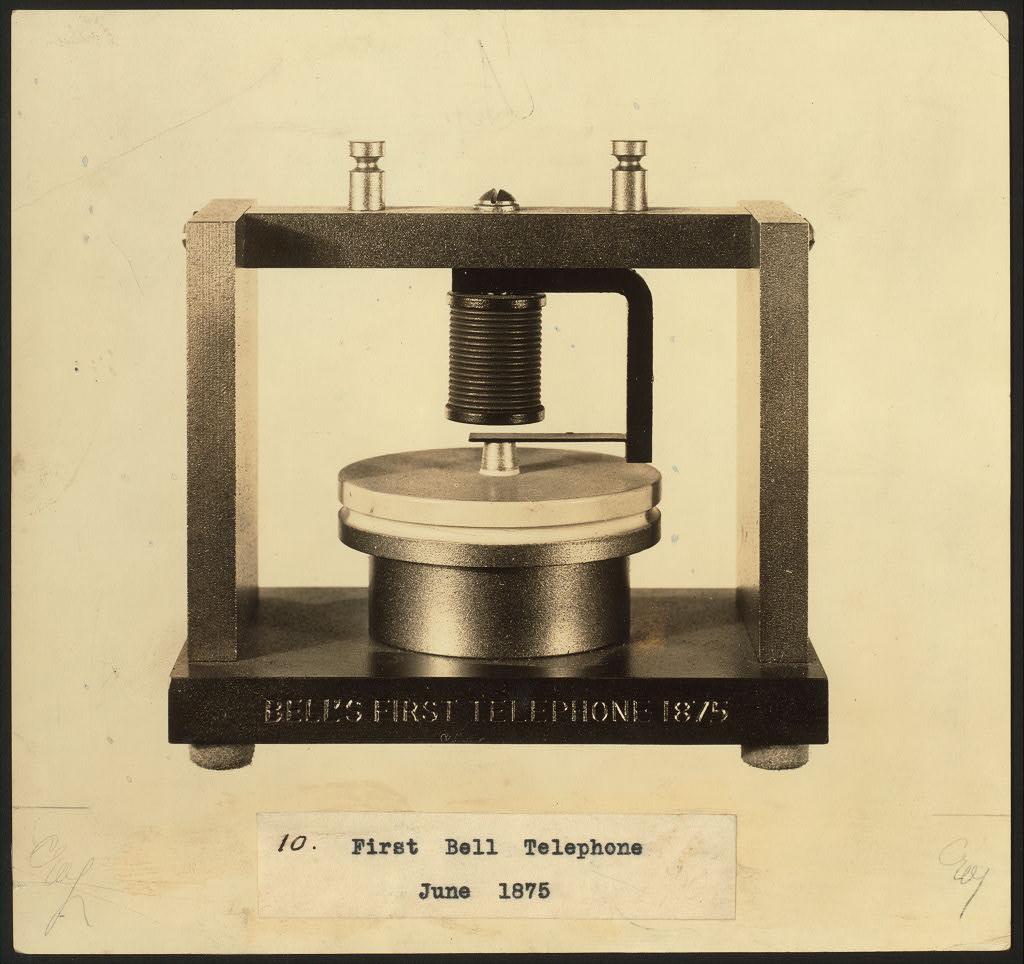
Bell’s First Model 1875
Not sure how this model worked.
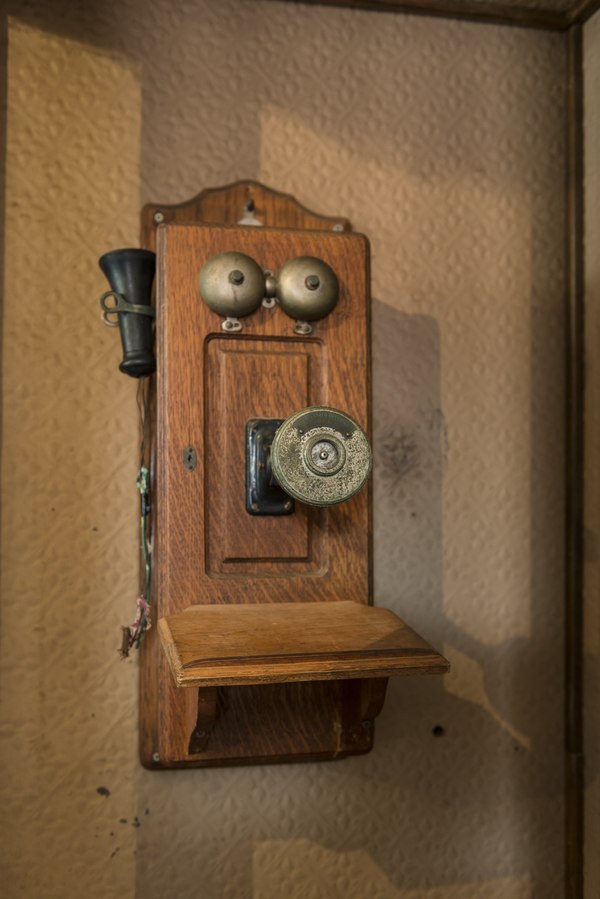
Old Antique Crank Telephone
An antique crank phone that can be seen at Buffalo Gap Historic Village, Taylor County, Texas. Photographer: Carol M. Highsmith
Rotary Desktop Phones
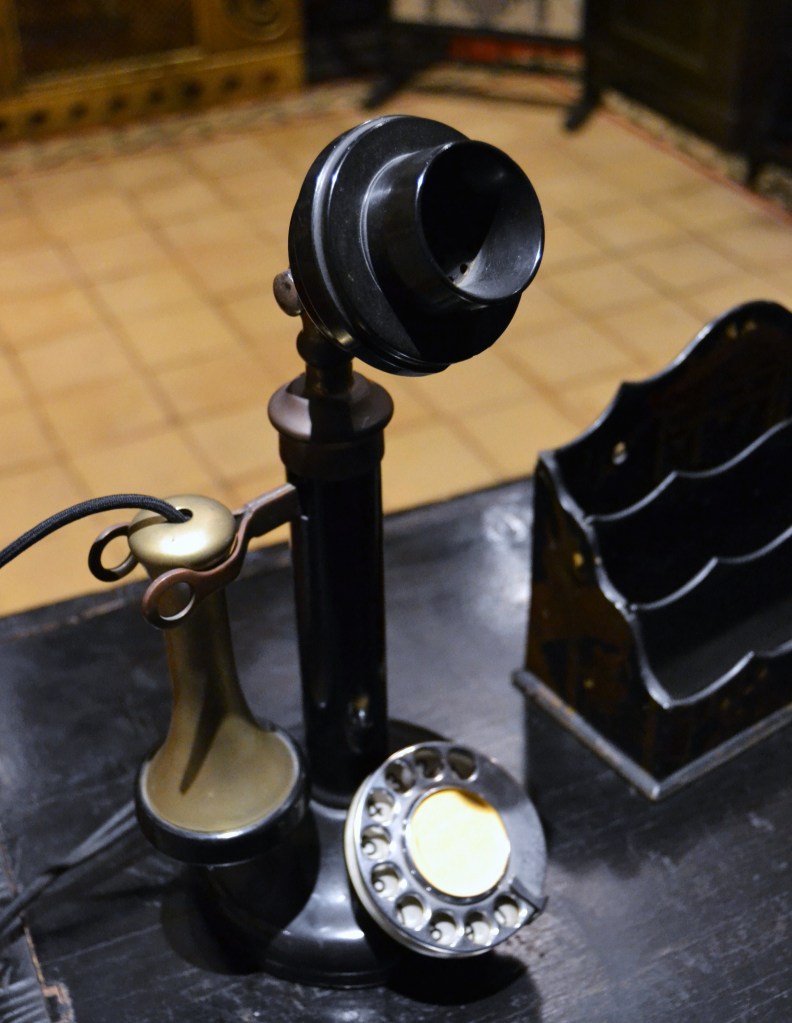
Telephones became more modern and rotary desktop phones became popular. The rotary phone was a phone that had the numbers 1-9 and was designed by Almon Brown Stowger in 1891. One of the popular models in the 1940s was the candlestick phone.
A very old rotary telephoneA fancy white desktop rotary phone.
Moving Forward to Smart Phones
Today almost everyone including children carry what is called a smart phone with them at all times. These phones are very convenient to stay in constant touch with family and friends. I was extremely glad to have my phone with me when I hit a pothole in the pouring rain one night. It allowed me to call for help while remaining inside my car. These portable phones are a great help in times of emergencies.
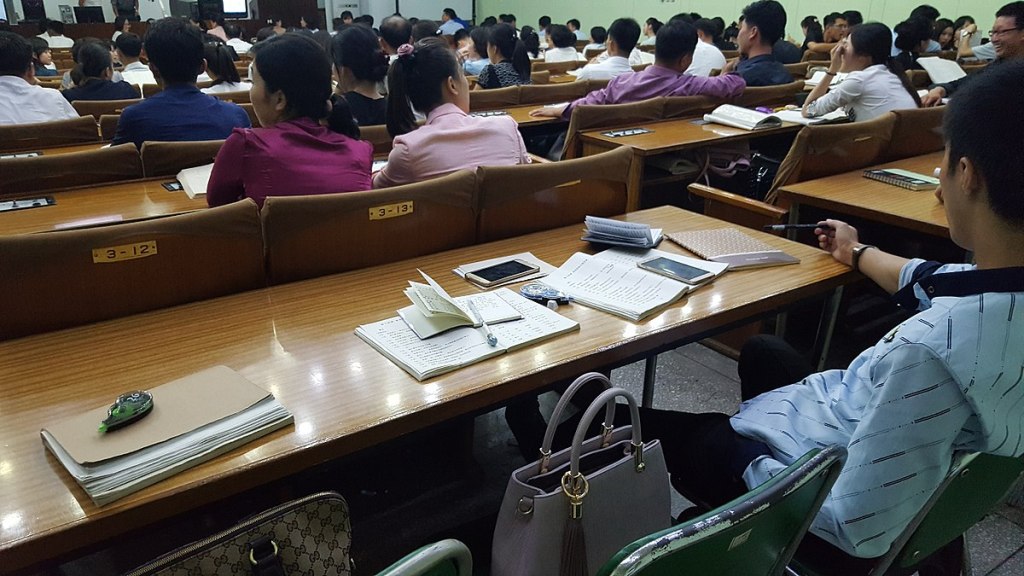
Smart cells phones are an essential part of our society. Parents can stay in contact with their children easily and know where their children are. Of course, there are also safety issues with teenagers going online with strangers who may cause them great harm. There are also many questionable sites that are not suitable for children of any age to be using. But smart phones are here to stay. They have good and bad uses depending on the way they are used. In the picture below we see students with their phones in school. It makes you wonder what will be coming next.
Today, almost every student has a cell phone with them.
Covered Bridges once covered most of America’s streams and creeks, connecting towns and counties. However, today most are gone and have been replaced by unappealing but sturdy and safe concrete bridges. Beautifully structured covered bridges are now mostly just memories and pictures to younger Americans. Even I barely remember traveling over these bridges as a child. But in my area we do have a few bridges that have survived the years of high water and floods. These floods moved many bridges off their foundations. They washed them downstream or completely destroyed them. Some have been turned over to the local county historical society which keeps them in good shape. Most can not be driven over any more but there are two that still are open to traffic.
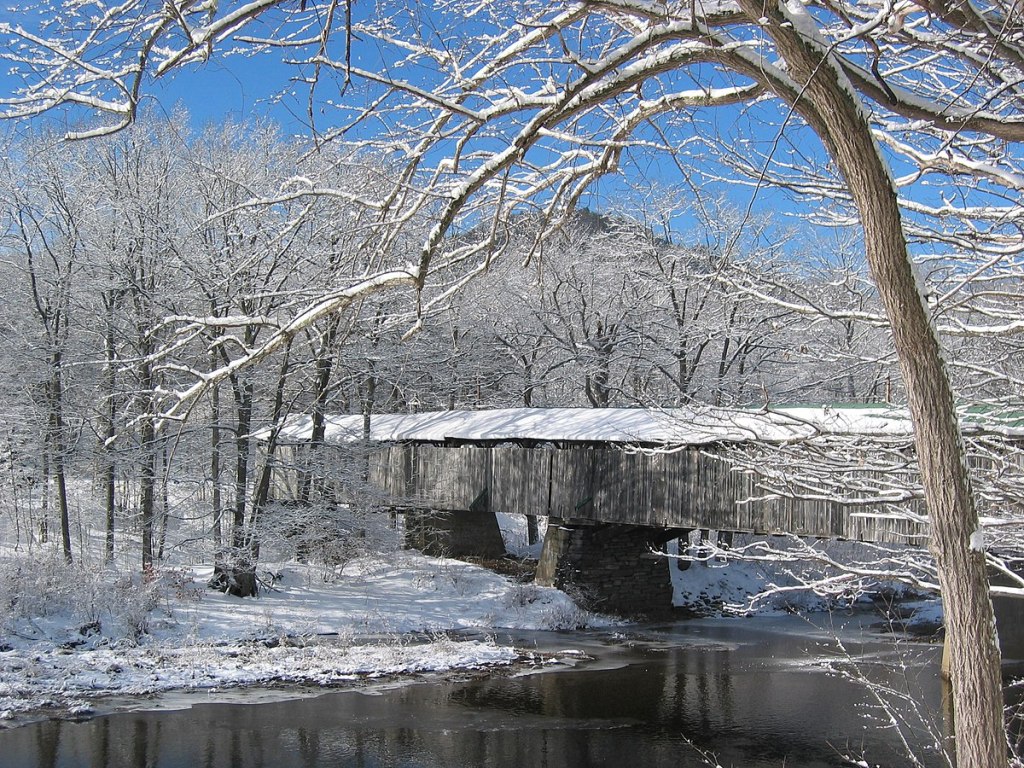
Beautiful Covered Bridge in Winter
A Gone Forever Era
Covered bridges are a significant part of America’s history. They bring back good memories of a time when life was simple and carefree. Covered bridges certainly create an urban country picture like nothing else. A picture of a covered bridge in winter shows snow covering it and an icy creek beneath. It makes me want to sing the song “Over the River and Through the Woods to Grandmother’s house we go.” A horse drawn sleigh completes the picture. In the fall, a covered bridge makes a beautiful picture. Colorful foliage surrounds it. Water rushes underneath it. We can only wish we still had the chance to experience just one more sleigh ride. We long for a ride over the old covered bridge. Sadly, that era is pretty much gone forever.
At one time, there were approximately fourteen to fifteen hundred covered bridges across the United States. Today, most of those bridges are gone. Some were swept away by flooding waters and severe storms. Others simply became too old and unsafe for heavy cars and trucks. Some of these covered bridges that do remain are at least one hundred and fifty years old. Many states are now trying to save these historical bridges and restore them. They have become historical landmarks. These bridges should be valued by future generations. Otherwise, future generations will never know their beauty.
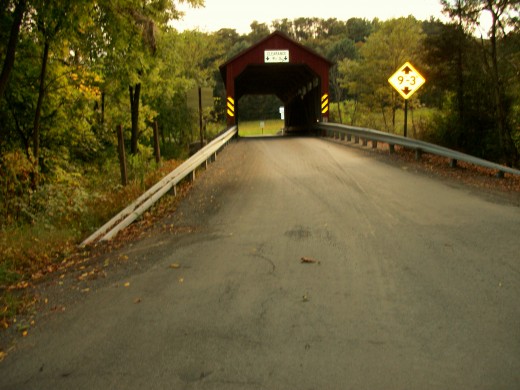
Pennsylvania was one of the few states that resisted adopting iron bridges when they became popular. Instead, it continued to build covered bridges. As a result, in Pennsylvania there are close to two hundred surviving covered bridges still standing. Today, a friend of mine and I drove across one of the few remaining bridges still in use today.
Covered bridge in Orential, PA
Ghost Stories Haunted Bridges
Covered bridges have many great stories to tell. Young lovers found these covered bridges great places to sneak away from prying eyes. But many of these bridges also have very sad stories. Legends are attached to them. Over the years, they have become sites for those interested in paranormal activities.
Historic Sachs Bridge In Gettysburg Pennsylvania
Gettysburg, Pennsylvania claims one of the most historic covered bridges in Pennsylvania or for that matter in the entire nation. Sachs Bridge was built sometime between 1852 and 1854 by David Stone. It crosses the Marsh Creek, in Adams County, for one hundred feet and is fifteen feet wide. This bridge gained fame because both the Union Army and the Confederate Army used it during the battle of Gettysburg. General Robert E. Lee and his confederate troops retreated from Gettysburg by way of Sachs Bridge.
It is said that this bridge is haunted three deserters were hung from the one end of the bridge. It is also near the hospital that was used after the Battle of Gettysburg.
The Sachs Bridge was closed to traffic in 1968. In either 1996 or 1997, heavy rains washed the bridge off its foundation. The rains moved it downstream. It has since been taken over by the Gettysburg Preservation Association and repaired.
Emily’s Bridge in Stowe, Vermont
Emily’s bridge is a colorful sad tale. The story is that Emily went to the bridge to wait for her young beau and the pair planned to elope. However, the groom failed to appear and Emily was found hanging from the rafters of the bridge. Another version of the story is that Emily was thrown from a horse into the water and drowned. And then there is the story of a woman who says she made up the whole story to keep kids in the seventies from partying at or near the bridge.
Hell’s Bridge in Michigan
This tale sounds like a horror movie. It seems that children were being abducted in the local area of the bridge. The townspeople decided to search for the abductor. They left their children in the care of a strange character named Friske whom they thought to be a kind caring old gentleman. But Friske turned out to be the one abducting and killing the children. Friske seemed to be possessed by demons and killed the children he was supposed to be looking after. The enraged parents immediately hung the old man from the bridge. It makes quite a gruesome story although it’s doubtful a true story.
Colville Covered Bridgein Kentucky
Colville covered bridge was built in Kentucky in 1877. There are several stories about the bridge being haunted. The biggest ghost story is about a pair of teenagers who died on prom night. The story is that the couple was driving home in the 1930s from their prom. Their car veered out of control. It ended up in the water, and the two drowned.
Covered bridges have some very interesting and colorful stories of young lovers and lost lives. How many of the stories are true no one knows. But these bridges certainly were a great part of our history. Hopefully, some will remain cared for to preserve their history and their stories.
Please Help To Preserve Our Historical Bridges
It takes time, money and volunteers to save our wooden covered bridges but they are worth the time and effort. These covered bridges have a timeless beauty, wonderful charm and great engineering structures. If you have the time, money, energy and knowledge to help save our bridges please consider helping.
Recycling is not a new idea. People have been reusing and recycling what they could throughout American history. From it’s very beginning people were doing what is now know as recycling.
Waste and recycling are not new concepts although many young people may think it is since it has now been given the name “going green”. Actually, recycling goes back several centuries or more. I have heard some young people make statements about how the older generation have harmed the earth and the environment. This is just not true. Life, technology and new products have just changed how we take care of our planet. While every generation has done harm to the environment, they have also done their part in trying to keep a clean environment. Times have changed and so have the way that people lives their lives. For instance, how many things have become disposable that we take for granted in today’s fast paced hectic world?
Disposable Items Have Developed Over The Years
Disposable diapers
Sanitary products
Kleenex tissues
Disposable razors
Paper plates and bowls
Plastic silverware
Takeout food containers
Plastic bottles
Milk jugs
Cloth Diapers
Before Disposable Items Were Available
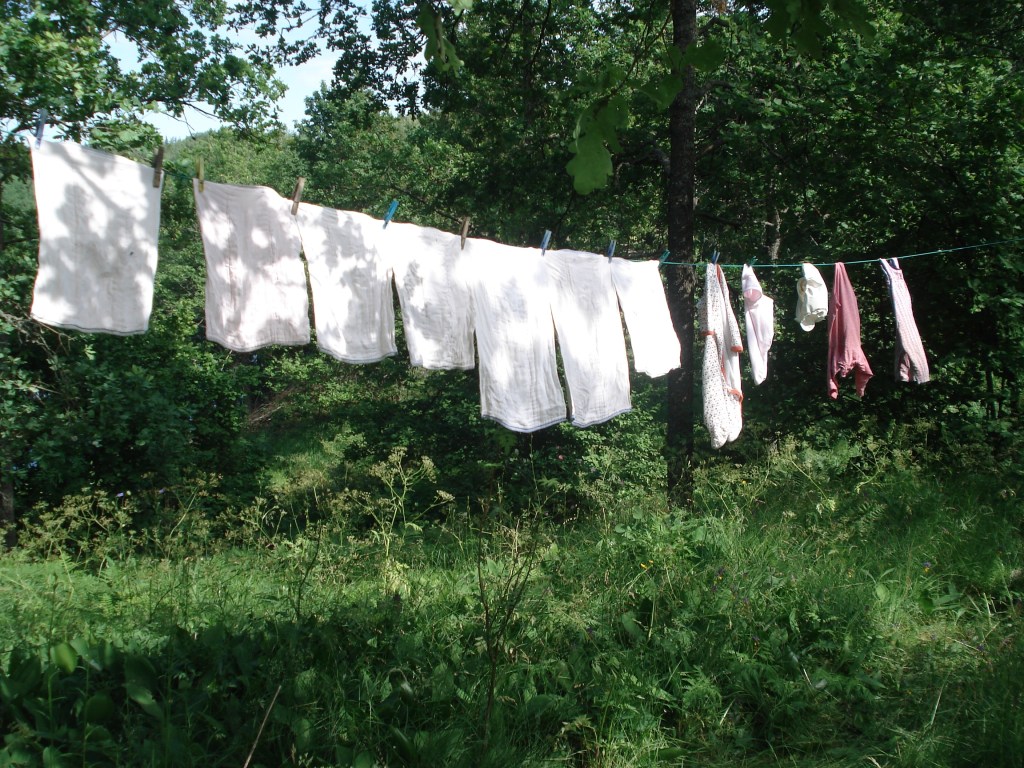
Disposable diapers are something no young mother could ever think of doing without. But older generations did not have this luxury. They did something that young people today would consider (too gross) to do. They used cloth diapers and the feces and urine were rinsed out, then the diapers were washed and hung on a line in the sunshine to dry, taken down, folded and put away to be used the next day and often times were used for the next baby. When they worn thin or had holes or tears, they were then used as cleaning rags.
Women’s sanitary products were also at one time used in the same way. My one hundred and one year old female friend tells me how she would use flannel pads that were washed, dried and reused. Can any woman image doing that today?
And disposable Kleenex tissues have replaced the old fashioned handkerchiefs that were washable and therefore reusable.
Picnics would not be picnics today if we didn’t have disposable plates, cups and plastic silverware. All which we take for granted. At one time however, real plates, glasses and silverware were packed into a picnic basket. All items were taken home, washed and packed away to be used for the next outing.
Take Out Food
We now live in a world of takeout food and fast food restaurants. Who hasn’t ordered in pizza or brought home Chinese food for supper? No dishes or pots and pans to clean up. That is truly the way to go. All the mess goes straight into the garbage except for putting those pizza boxes or sandwich boxes into the recycling bin.
Recycling Cans And Bottles
Cans and plastic bottles are now used in place of glass jars and containers. Consider for example, milk used to come in glass jugs while soda came in glass bottles. Milk jugs were returned to the dairy where they were thoroughly scrubbed and scalded to make certain they were sanitized to be used again. Soda bottles were collected to be turned in and in exchange you received 5 cents per bottle. Today, milk, soda, water and other beverages almost all come in plastic containers. These plastic containers should then be collected and recycled.
Cans are also recycled to make new cans. Now we save and return aluminum cans and receive money back for the aluminum cans.
How Americans Recycled During The Depression Years
During the depression era, nothing was thrown away that could possibly be used again. People found uses for everything. This is a short list of some of the items that people recycled.
Flour sacks were emptied, cleaned and were reused for clothing and quilts
Sheets and clothing were never thrown away. They were mended and when they were no longer salvageable, they were used as cleaning rags
Even the smallest soap slivers were not thrown away. They were used in some other way such as melted with other slivers to make new cakes of soap or some were thrown into the wringer washer to wash dirty clothes
Tires on bikes and cars were patched instead of replaced. Tires were also used as tree swings for children
Chickens were for meat and eggs but the feathers were also washed, dried and used in pillows and blankets
Americans Recycled Everything For The War Effort
One of the biggest recycling efforts that ever took place occurred during World War II when just about everything was recycled for the purpose of making necessary war items. There were huge campaigns asking people to support the war effort with their old unused items.
Scrap metal was collected and used for making tanks, airplanes and ships
Cans were also recycled for the same purposes
Old clothes made blankets and uniforms as well as other clothing for the soldiers
Pots and pans were used as scrap metal
Rubber of any kind which was in extremely short supply. This included raincoats, rubber boots and even old records
Newspapers and magazines
Animal fat was collected and used for explosives in the war.
Even children sacrificed their favorite metal and plastic toys to help the soldiers
This list sounds an awful lot like the items we still recycle, doesn’t it?
Life Changes How We Recycle
Recycling and the way we live our lives has changed through the years. Our ancestors did their part in saving the earth by recycling the materials that they had available to them. From Colonial times, when even the smallest scraps of clothe were saved to be sewn into blankets, through the depression era and several wars, Americans have been recycling.
Today, we have many more modern conveniences that make our lives so much better than other generations. Those conveniences do use more energy but could any of us do without them? We can still do our part by recycling and conserving what we can to save our earth for future generations.
Would you be willing to leave your home country, your family, friends and everything you are familiar with to follow your faith? Would you sell everything you own to take a ship to a new country without knowing what might lie ahead of you? Relying only on faith, could you walk thirteen hundred miles in extreme heat, rain and freezing snow while pushing and pulling a heavy cart up steep mountains and across raging, freezing rivers? As you watched your fellow brothers and sisters fall sick and die along the way, do you think your faith might falter along the way?
This is exactly what an estimated fifteen hundred Mormon saints did in the year 1856. In 1856 the Mormons had sent missionaries to several European countries and converted thousands to the Mormon faith. Brigham Young, a dynamic Mormon church leader encouraged these converts to immigrate to the United States to an area in the Salt Lake City Territory. Here they were promised life would be better than Europe.
The problem was that many of the new converts were also too poor to meet the expenses necessary to pay for the entire journey. Expenses included the cost of passage on a ship to America, then taking the railroad to Iowa, then buying a covered wagon with a good team of oxen, as well as provisions along the way. Attempting to cut expenses to make it more affordable, Brigham Young and the Mormon Church had come up with the handcart companies.
This would allow the converts to make it to Iowa where they would be outfitted with a handcart which they would each be allowed to take seventeen pounds of bedding, clothing and a few personal items. Each company would have close to five hundred members and experienced leaders would lead each company west to Salt Lake City. Several covered wagons and teams of oxen would carry provisions and would carry those who became sick or were too old or injured.
Handcart Regulations
One family for each cart
Up to five people were assigned to a cart
Each person was allowed a total of seventeen pounds
Tents which held twenty people and provisions were carried on wagons with teams of oxen
The Test Of Faith Begins
Several handcart companies with hundreds of converts left Europe and made it to Iowa early enough that even with the hardships of the trail, the first companies made it safely to their new home in the Salt Lake Valley. However, two of the later companies were not as fortunate.
The Willie Company left Liverpool, England in mid May and would not reach the New York Harbor until Mid June. As they approached the New York Harbor there was much rejoicing, excitement and giving of thanks for a safe journey. During the trip, there had been a few deaths, births and a wedding or two. In general though, the saints were in good spirits and they spent a lot of their time on board in worship meetings and prayer.
After landing in New York they were allowed a few days of rest before they would proceed by train through the state of New York to Lake Erie. A steamboat would carry the converts across the lake, where they would board trains to take them as far as Iowa City, Iowa.
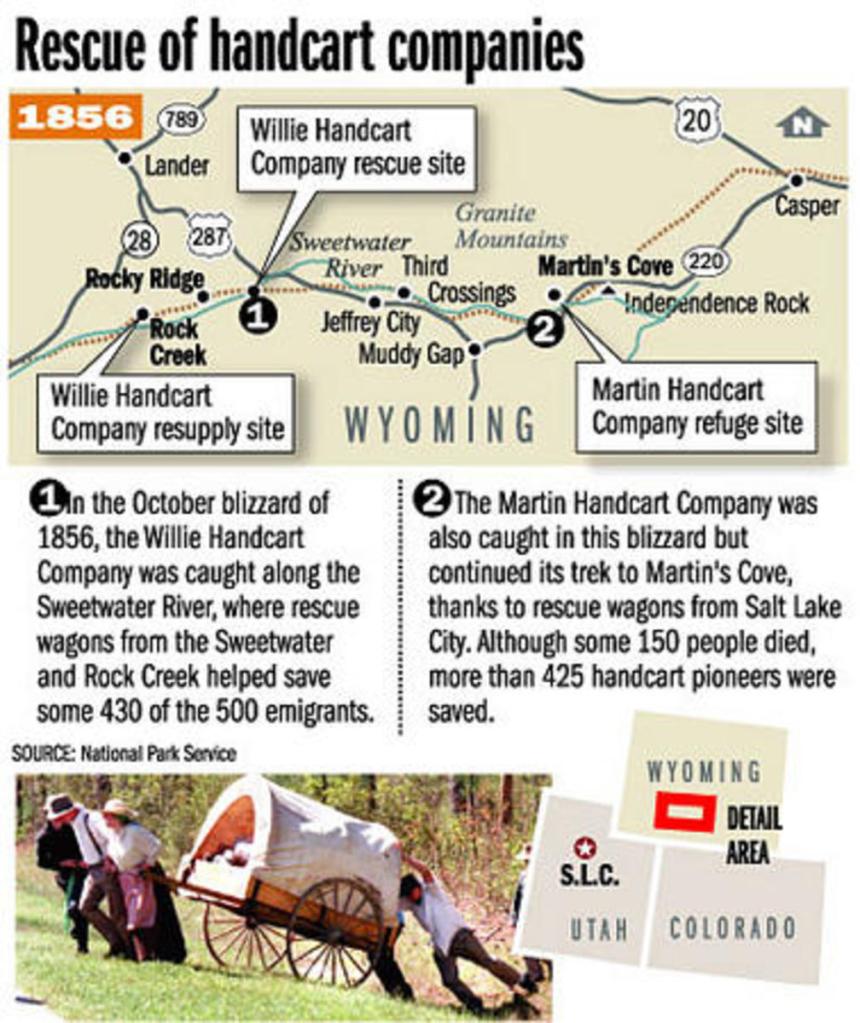
The Willie Company left Iowa City in Mid July and the Martin Company left almost two weeks later close to the end of July. It would be a four month trip and both companies were getting a late start. By the time they made it to Wyoming, it was possible they could encounter early winter weather.
The Journey Becomes A Disaster
In Iowa City, the immigrants were awaken by the sound of the bugle calling them to worship services after which time the handcarts lined up and they started one of the longest walks in history. They left Iowa City in high spirits, singing songs of praise and full of hope for their new destiny, having no real idea of what horrors and trials might lay ahead of them.
In July, they suffered through the intense heat of the summer each day and managed to walk between twelve and twenty miles a day depending on the trail conditions. They stopped only for brief periods for lunch and camped each evening along a creek or river so there was water for the saints as well as the livestock. As the days wore on, the elderly began to take sick and die along the way. Few of the elderly would live to see their new homeland. They would be buried along the trail.
By early August, they had reached the Missouri River and by mid to late August they had reached Florence, Nebraska. Here, each company held meetings to discuss whether they should spend the winter in Florence or continue onward to the Salt Lake Valley. Although some, including one of the more experienced leaders Levi Savage, voiced the opinion of staying due to the coming onset of winter, pointing out the lack of warm clothing, pregnant women, children and the elderly. However, the saints were anxious to reach their destination and the final decision was made to try to reach Salt Lake City before winter.
Throughout September things went well but in October the weather began to change rapidly and became much colder. Provisions began scare and were rationed. The saints began to lose weight and strength needed to pull their carts. More and more of the elderly and the children became sick and deaths increased almost on a daily basis.
The journey had become a nightmare but through all the terrible hardships the saints held fast to their amazing faith in God that he would deliver them safely to their new homeland.
Both the Willie and the Martin companies got caught in October with an early snowstorm. Both companies ran low on supplies and had to ration supplies causing many to die of starvation. They crossed rivers in the freezing cold water and many suffered from frostbite and had limbs amputated. Some simply could not go any further and froze to death.
Rescue of the Mormon Handcarts
The Rescue
At the end of their endurance, rescue teams sent out from the church began to reach both companies but not before both companies had terrible losses. Even with the rescuers arrival, supplies were still limited and the freeing conditions continued to hamper their progress.
Through all the hardships and sorrows one thing endured and that was their faith in God. As one gentleman who survived said: The journey was one of the hardest that anyone would ever experience. However, in spite of everything, the hardships, death and sorrows along the way, the journey had made them one with God because at the end they had nothing else.
Young Sarah was just an ordinary girl of the nineteenth century. However, she had more advantages than many other young ladies. She had the benefits of a superior education in private schools. She could play the piano extremely well, as most young ladies of that era. She was also fluid in four different languages. Sarah was the daughter of Leonard Pardee and Sarah W (Burns) Pardee of New Haven, Connecticut. Sarah was small, petite, and pretty. She was very active socially. In fact, she was sometimes referred to as the “Belle of New Haven.”
Sarah Weds William Winchester
The American Civil War was still raging on when Sarah Pardee married William Winchester, the only son of Oliver Fisher Winchester. Sarah was twenty three when she married William on Sept 30th 1862 and her new husband was thirty. The wedding despite the civil war was a great social event because the groom was from a wealthy family who owned Winchester Repeating Arms Company. Sarah’s father in law had started out with a business making men’s clothing. However, in 1857, Oliver saw great opportunity in the rifle business with the coming civil war.
Little Annie Winchester
After the wedding Sarah and William settled down to a busy life as newlyweds. Sarah became involved with various social functions and charity events while William learned the rifle business from his father. Soon Sarah was expecting their first, and as it turned out their only child, a daughter Annie Winchester. Their happiness with their infant daughter was short, a mere forty days and little Annie passed away on July 24, 1866 leaving grief stricken parents. Just fifteen years later, Sarah lost William who died in 1881 leaving Sarah a very wealthy young lonely widow.
The Lonely Widow
We can only image the pain and loneliness that the young widow must have endured after losing her only child and her husband. Rumors are that Sarah begin to visit a psychic and somehow she began to blame the Winchester guns as the reason for her misery. Perhaps she felt that losing her own child and husband was a curse or punishment for all the lives that had been lost due to a Winchester rifle. Perhaps she felt that all the millions she had inherited had those dead souls blood on them. It’s really impossible to fully understand what motivated Sarah to think like this. Or was she just severely depressed?
Sarah Moves to Santa Clara County CA
In 1886 Sarah Winchester moved across the country to Ca to begin a new chapter in her live. Perhaps the rumors were true that a psychic had influenced her move but it seems there were other reasons. After losing her husband it could be that she wanted a fresh start. Another theory suggested by a distant family member is that her doctor advised her to move due to health concerns. My guess is that all this factors combined is why Sarah Winchester made the decision to move to Ca.
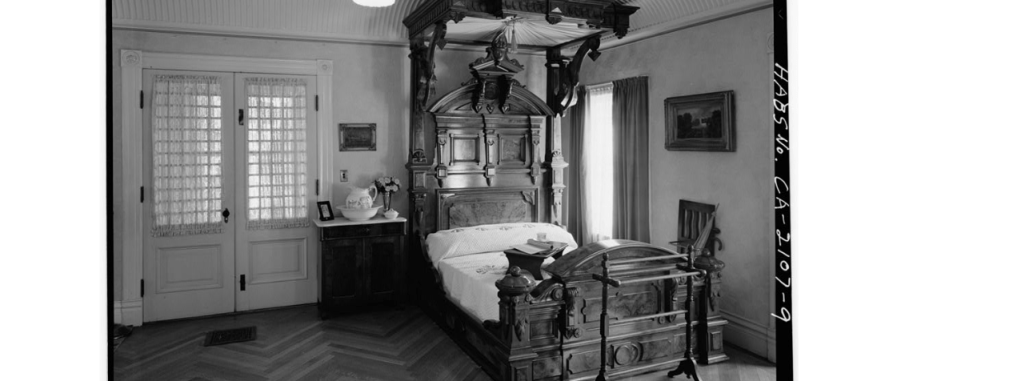
Bedroom in the Winchester Mystery House
Building the Famous Winchester Mystery House
When Sarah arrived in San Jose, Ca in 1886, she immediately purchased a small farmhouse. It had a lot of acreage. The first thing she did was to hire a crew of men. They started remodeling and building more rooms to the house. Gossip followed about the wealthy heiress as she added more rooms and the house grew. In 1906 California suffered from the Great Earthquake and the earthquake also destroyed parts of the Winchester mansion. While it had grown to a seven story house, some of those upper stories suffered earthquake damage. At that point Sarah decided to build no higher than the four remaining levels. Perhaps this explains the parts of the house where stairways go nowhere. Other odd features exist if these areas were simply closed off and never repaired. But now the house continued to expand outward inside of adding more stories.
Sarah the Legend
The work continued, the house grew and so did the gossip about the eccentrically wealthy Winchester widow. The stories began that Sarah was building the house to appease the souls that had been killed with the Winchester rifles.
Sarah’s story and the legend of the Winchester Mystery House fascinates me and I hope to one day visit this mansion.








 History Lovers Corner