Uncategorized

Achievements of Dorothy Day: A Legacy of Service

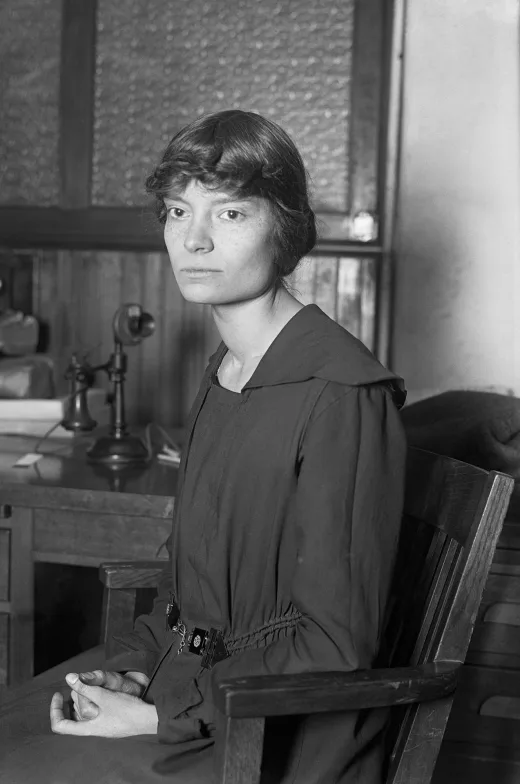
Dorothy Day as a young woman

Dorothy’s Early Years

Dorothy Day was born as one of five children to John and Grace Day in Brooklyn, New York on November 8,1897. Her father was a sports writer and later became a sports editor. A few years after Dorothy’s birth he moved the family to San Francisco, California to take a better job. The Days family lived in California until the Great Earthquake in 1906 which destroyed her father’s place of employment. Before they left California Dorothy and her mother tried to help those who had been left homeless from the earthquake. This probably influenced Dorothy in such a way that years later it became her life’s work to help others in need.

The Day family then moved to Chicago, Illinois and lived in one of the poorer sections of Chicago until her Father found work that allowed him to move his family to a better neighborhood. Dorothy never seemed to forget what it was like to be poor and perhaps that is what led her to make the choice of helping the poor and less fortunate.

College Years

While still living in Chicago Dorothy won a scholarship which allowed her to go to The University of Illinois and she attended there for two years from 1914 until 1916. Dorothy loved reading and learning and she especially enjoyed reading the works of Dickens and Poe as well as others. It was at the university that her journalistic career began when she went to work for a small local paper. The friends she chose while in college were generally socialists who influenced her to join the Socialist Party. With her friends she became involved with radical causes concerning poor working people.

Life as a New York Reporter

Two years later, she gave up her studies at the university and moved to New York. She was just eighteen years old at the time. Here she found her first real job as a reporter working for the New York Call where she worked for a few months before leaving The Call to work for The Masses. As a reporter she covered labor meetings, protests and riots as well as other social causes. Here in New York, she made friends with other journalists, liberals, socialists, labor collaborators and communist that she met through her work. During this time, Dorothy was like most young women, enjoying life, her first relationships with men and love. She also became pregnant during this time period and she chose to have an abortion rather than raise the child

Occoquan Prison: The Night of Terror

While working as a reporter for The Masses, Dorothy traveled to Washington, DC to join with a women’s suffrage protest organized by Alice Paul, Lucy Burns and The National Women’s Party. As a result, Dorothy and several of the other women were arrested and spent several weeks in jail. Dorothy asked for and was given a Bible which she took much comfort from. After being arrested and sentenced to thirty days in jail, Dorothy and the other women went on a hunger strike which drew the attention of President Woodrow Wilson who ordered the women to be released from jail. Later these women dubbed their time in the Occoquan Prison as “The Night of Terror”.

Love and Heartbreak

n 1918, Dorothy thought it was time to look for a possible new career and tried nursing by enrolling at Kings County Hospital in New York. It was while she was in nurse’s training that she met and fell in love with a fellow newspaper associate, Lionel Moise. She became pregnant with his baby which he insisted that she abort, so in an attempt to keep the man she thought she loved she had the abortion. She was only 21 at the time. Dorothy often stated how deeply she regretted making that decision because within a short period of time Lionel had walked out and left her anyway.

After Lionel walked out Dorothy was heartbroken and she married Berkely Tobey on the rebound. The two of them traveled for some time together but the marriage was a brief one and ended in divorce shortly afterwards. After divorcing Berkely Tobey, Dorothy entered into a relationship with Forster Batterham for several years and became pregnant for the second time. To Dorothy, this was a miracle because she had believed that she could not have children after having the abortion. She gave birth to a daughter she named Tamar Theresa on March 4,1926. This was the beginning of the end of her relationship with Forster who had not wanted either marriage or children and soon after the two went their separate ways.

The Beginning of a Lifetime of Serving God

Between 1932 and 1933, Dorothy met Peter Maurin an illegal immigrant who was also a scholar with leanings toward the catholic faith. On May 1,1933 the two of them published their first issue of The Catholic Worker and began focusing on their mission of promoting Biblical teachings, morals, mercy and justice, which was also committed to forming a nonviolence peaceful society. Together these two would work for social change, better working conditions for workers and help and comfort for the poor.

Achievements of Dorothy and Peter

  1. Started the newspaper (The Catholic Worker
  2. Opened the first House of Hospitality in 1933
  3. Started farming communes for people in need who could live on the commune and help to raise food and animals to meet their needs
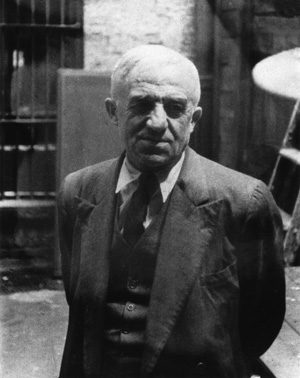
Peter Maurin, Dorothy’s close friend and co-founder of the Catholic Worker’s Movement

Books Written by Dorothy Day

  1. The Eleventh Virgin
  2. From Union Square to Rome
  3. House of Hospitality
  4. On Pilgrimage
  5. The Long Loneliness
  6. Selected Writings
  7. Loaves and Fishes
  8. The Reckless Way of Love (notes on following Jesus)
  9. The Duty of Delight
  10. All the way to Heaven
  11. Peter Maurin Apostle to the World
  12. Dorothy Day and the Catholic Worker
  13. Meditations
  14. In My Own Words

This is a short list of the books that Dorothy Day wrote. She also wrote over three hundred articles for various newspapers that she worked for over her lifetime. Many of her books are books of faith and stories of how she spent her lifetime and her faith in service to others.

Dorothy Day Honors and Achievements

Dorothy achieved so much that it is hard to comprehend everything this woman did but this is a short list of some of the most memorable events of her life.

  • Dorothy had the honor of meeting Mother Teresa in 1970. It’s believed that Mother Theresa gave Dorothy one of her crosses
  • Received Communion with the Pope 1967
  • Received birthday wishes from the Pope on her 80th birthday in 1977
  • University of Notre Dame honored her with the Laetare Medal which is given for outstanding service to the Catholic church and society
  • Dorothy had a long and deep impact on the Catholic church

This is only a few of the achievements and honors that Dorothy received during her lifetime.

In Conclusion

Dorothy Day was a determined and courageous woman who found her faith and her strength in the Catholic Church. Upon finding her faith, she worked hard and tirelessly for the poor. She gave more of herself than most of us are capable of. She was jailed several times in her efforts to help women fight for their rights in addition to other causes that she felt strongly about. She spent most of her adult life serving her God, her church and her fellow human beings. Let us all strive a bit harder to be more like Dorothy Day and make the world a better place. A world more like Dorothy Day’s vision of caring and loving our fellow human beings.

Copyright L.M.Hosler 2019

history, History, Uncategorized, Women and History

The Inspiring Life of Nellie Bly: Pioneering Female Journalist

Elizabeth Cochran Better Know as Nellie Bly

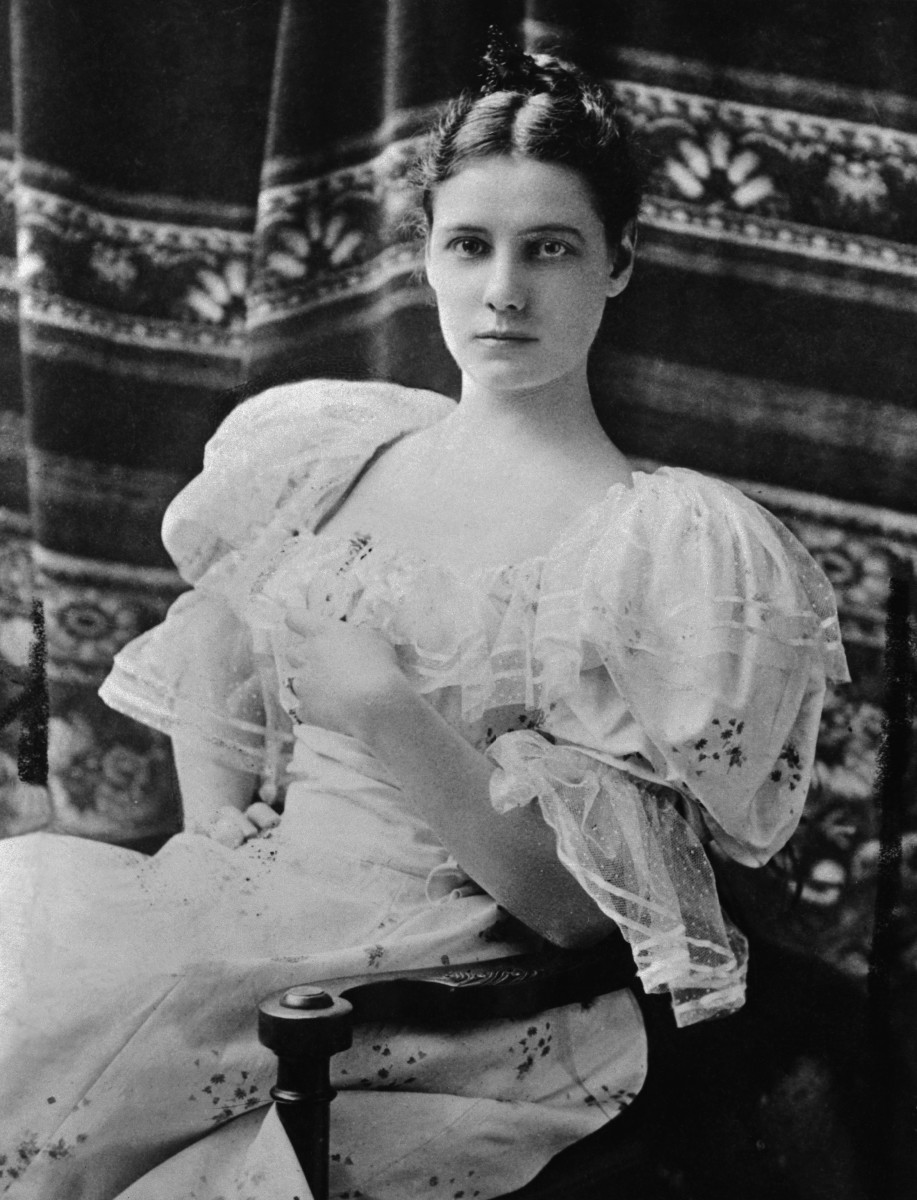
Nellie Bly at twenty one years old while working as a foreign journalist in Mexico

Nellie Bly Early Years

Nellie Bly was born in 1864 in Cochran Mills, Pennsylvania at a time when women were expected to stay at home, have babies, take care of their men and be happy doing that. Women had very few rights at that time, little education and they rarely had good career choices. Nellie was born into a large family of fifteen. Her father had ten children before he married Nellie’s mother, who then gave birth to another five children. Nellie was named Elizabeth Jane but was also nicknamed “Pink or Pinky”. Later when she began her career as a newspaper woman, she changed her name to Nellie Bly as her pen name. Nellie’s father died when she was six years old and the family fell into hard times. Her mother remarried but it is said that her new husband was abusive. Sometime later her mother divorced the stepfather leaving Nellie and her mother to support the family by operating a boarding house just outside of Pittsburgh.

Nellie had wanted to become a teacher and briefly attended the Indiana Normal School, now know as Indiana University of Pennsylvania. However, the family’s finances forced her to give up her teaching dream. It was at this time that Nellie left school to help her mother run the boarding house but she still had dreams of what she wanted to do with her own life.

Nellie Begins Her Career as a Reporter

Nellie began her career as a writer and reporter in 1885 at the Pittsburgh Dispatch newspaper. She had written an angry letter to the paper’s editor in response to an article that she felt disrespected young girls and women. After reading Nellie’s letter, the editor offered her a job working for the paper. Very few women were ever offered opportunities like this and Nellie quickly accepted the offer. She was generally given assignments that were considered of interest to women. Here Nellie could give a voice to issues that concerned women such as poor women who had to support themselves as well as the working conditions these women found themselves in. Of course, some of her articles didn’t sit well with the business class and this was the reason she was reassigned to writing just for the women’s page such as society news. Nellie soon grew tired of these boring assignments and wanted more of a challenge. She found her challenge by going to Mexico as a foreign correspondent for the paper where she spent several months writing about the lives and conditions she found in Mexico. After a few months however, she drew the displeasure of the Mexican dictator Porfirio Diaz when she wrote articles critical of his leadership and government. Nellie was forced to leave the country but later she published her book “Six Months in Mexico”. It seems Nellie’s honesty as a reporter was not always appreciated and tended to get her into trouble.

Nellie Exposes the Insane Asylum Blackwell Island

In 1887 Nellie decided it was time to move to New York where she took a job at The New York World paper as a reporter. Her first real assignment with the New York World paper was to go undercover as an insane girl to the Blackwell Island mental institute. How many of us would willing have ourselves committed to an insane asylum? Not very many of us I am sure. Here she spent ten days living locked up with insane women. She saw and experienced everything that a truly insane person would experience. As a result, she wrote a series of articles exposing the mental health facility and she was able to bring about awareness for the mentally insane and instigate an investigation into Blackwell Island. This brought about much needed reforms for mental health institutions. Her story of her time in the mad house later became the movie, “Ten Days in a Mad House”. It was an awesome movie but I believe it was rather dramatized as they tend to do with movies.

Some of the reforms that were brought about by Nellie’s daring venture into Blackwell Island institute for the mentally insane included:

  • Better food for the patients
  • Better health care
  • Warmer clothing and more blankets
  • More oversight into the doctors and nurses treatment of the patients
  • Warm baths instead of icy cold baths
  • Cleaner clothing, towels and personal care items

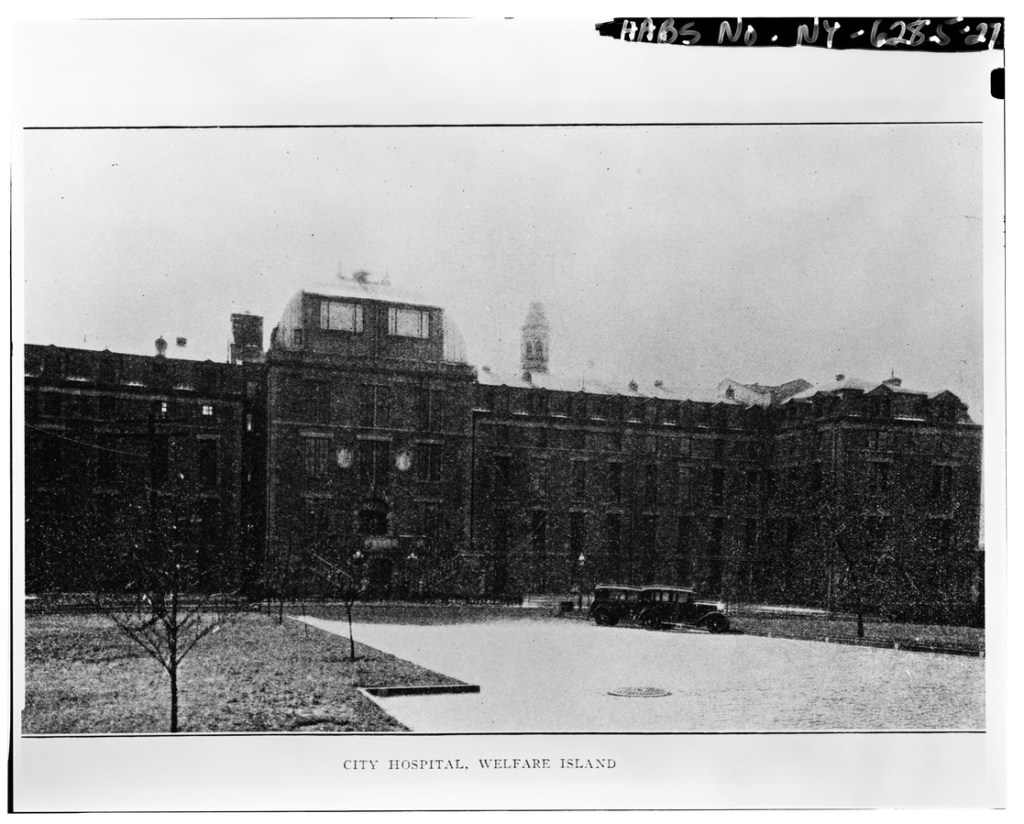
Blackwell Island for the Mentally Insane Asylum

The Blackwell Mental Institute for the insane where Nellie Byl spent confined for ten days

Nellie Travels the World in Seventy Two Days

Nellie also had the opportunity to travel around the world to beat the previous fictional world record of eighty days. When Nellie brought up the idea of beating the old record her editor told her it wasn’t a job for a female so Nellie challenged him to send both her and a man at the same time. Her editor gave her the assignment. She left Hoboken, New Jersey on Nov 14th, 1889 by ship, traveling to London. From London she took trains to Paris and throughout Europe. From there she traveled to Egypt then on to the Suez Canal then headed towards Middle Eastern countries. From there, she next journeyed through Asian countries and into Japan. From Japan she headed home to San Francisco, Ca. Her journey consisted mostly of travel by trains and ocean liners but there are also reports of various other means of transportation such as horses and Asia rickshaws. Nellie completed her journey in record time with a total of twenty one seven hundred and 40 miles in seventy days, six hours and eleven minutes. I am not sure Nellie was aware at the time she began her journey that the Cosmopolitan magazine was also sending another female reporter, Elizabeth Bisland, on the same mission.

During those seventy two days as Nellie traveled the world, the editor of The New York World used her trip to drive up circulation of the newspaper. Nellie would send dispatches to the paper on where she was every day. The newspaper sponsored a contest offering a prize of a trip to the person who made the most accurate guess as to how long her trip would take.

Upon her return arrival in San Francisco on Jan 25th 1890 Nellie was greeted with crowds of admirers and was given a special train to make her trip back to New York. When she arrived in New York she was honored with parades, brass bands and fireworks to celebrate her victory and safe return. She later wrote her book titled “Around the World in Seventy Two Days”.

Nellie’s Many Accomplishments

Nellie Bly was certainly a woman ahead of her time. In a time when women were looked on as nothing more than a wife, mother, housekeeper and laundress, she blazed a path of her own. In 1895 Nellie married Robert Livingston a man quite a bit older than her. After his death, Nellie wrote numerous articles covering the women’s suffrage movement. Her words and her stories were a powerful tool for women everywhere. Nellie also covered the First World War reporting from the Eastern front lines. Nellie received numerous awards for her work throughout her lifetime and she certainly left her mark on the journalist world. In 1998 Nellie Bly was indicted into the National Women’s Hall of Fame.

Nellie Bly was a leader whose work influenced women’s lives in many ways. Her early work exposed factories and influenced changes in safety. She became a role model for young women who dreamed of becoming something more than a wife and mother.

Copyright  2019 L.M. Hosler

Uncategorized

From Commoner to Queen of England: The Journey of Elizabeth Woodville

The White Queen Novel

The White Queen novel is written by Philppa Gregory, a historian with a keen interest in English kings and queens. Philppa Gregory combines her love of history, writing and researching into this compelling story of Elizabeth Woodville, the daughter of a squire and a young widow with two young sons. This is the story of one young woman’s rise to the height of power, her fall from power, her struggles to save her children and the love she has for King Edward IV. The book is well written and Philppa Gregory does a great job with researching any of her books. Although it is fiction, it is based on real people’s life’s and real events that occurred during their lifetime.

This is the story of great royal families fighting for power and the throne of England as the greatest prize of all. Many of these great families would fight against their cousins in a war that became know as “The War of The Cousins” and later known as the War of The Roses. This was a time when friends, cousins and brothers could turn on each other in the middle of a battlefield in a moments notice.

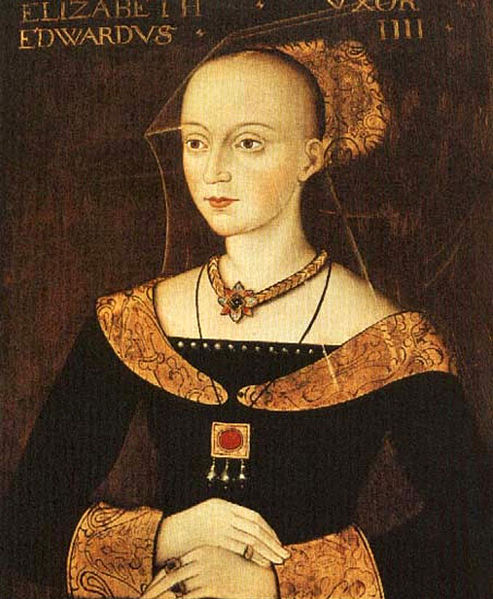
Queen Elizabeth Woodville

Elizabeth’s Story

Elizabeth Woodville was considered to be a commoner and not good enough to marry a king, even though her mother Jacquetta of Luxembourg came from the royal family of Burgundy and had been married to the Duke of Bedford. Elizabeth’s father however, had been merely a squire in the Duke’s service so Elizabeth had no real prospects of a royal marriage. She was also the young widow of Sir Thomas Grey and had two small sons.

Elizabeth waited alongside the roadside hoping for a chance to petition the king to have her land returned to her. When the young King Edward saw her waiting alongside the road with her two boys he was instantly captivated by the beautiful lady. Edward attempted to make Elizabeth his mistress but she firmly refused, she would settle for nothing but becoming his wife and his queen. They soon married in secret and against the wishes of his top advisers and counsel who were hoping to make a match with a princess of France and King Edward.

Elizabeth is soon anointed as Queen Elizabeth. Through her new husband begins to move her many family members into positions of power and wealth through marriages, which infuriates Edward’s great friend and mentor the Earl of Warwick. The Earl of Warwick schemes and brings about an uprising in which he tries to have Edward’s younger brother George made king and put on the throne.

This is only one of the many uprisings and rebellions that King Edward and Queen Elizabeth faced as they ruled England and their own family grows. There would be many battles and much blood shed as the royal couple fight to stabilize England and keep the throne for their sons.

Elizabeth’s Young Sons: Heirs to the Throne

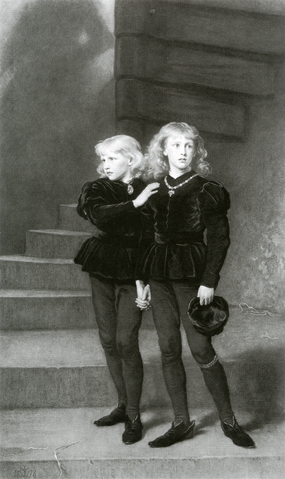
Young Prince Edward and his younger brother Prince Richard

Elizabeth came birth to several daughters and two sons who were the heirs to the throne after their father King Edward. King Edward, unfortunately dies while the two boys were too young to be named king. Edwards younger brother, Richard took the throne instead and the two young heirs were sent to live in the tower. One of the greatest mysteries in the story of Elizabeth Woodville, is the story of the two sons who were imprisoned in the tower and disappeared with no trace and no bodies were ever discovered. To this day, no one knows what really happened to the two young princes, Rumors were that King Richard had the two boys murdered so that he could be crowned king. However, there were several others who could have murdered the boys or given the order to have them killed. The author of The White Queen, gives a different theory on what may have happened to the heirs to the throne. The boys disappearances have never been solved and their killers were never found.

Reasons I Recommend Reading The White Queen

I have read several of Philppa Gregory’s books and I have loved every one that I have read. She uses actual people, dates and events to tell a fascinating story. Every book has been a page turner and hard to put down. In this story of The White Queen she describes battles, conflicts and emotions that I felt as if I were transported back time and as if I were right there in the middle of all the conflict. Thank goodness I was only reading about these treacherous and bloody times.

I personally love this type of story because of the history and that I know these things actually happened and people lived these stories.

I recommend this book for many reasons

  1. If you are like me and like stories base on history you will enjoy this book
  2. For those who like action to keep your interest there is lots of action detailing many of the battles of the War Of The Cousins
  3. Romance: Who wouldn’t like a love story involving the King of England who marries a squire’s daughter just because he falls in love with her even though she has no title or great wealth or power
  4. It is an intensely emotional story as Elizabeth the mother of the princes in the tower fights to save her sons
  5. Because the characters are based on real people, they seem very real

I would encourage anyone to read the story “The White Queen” by Philppa Gregory. This story has also been made into a television mini series which is very good. Philappa Gregory also wrote “The White Princess” Which is the story of Elizabeth’s oldest daughter and her marriage to Henry VII. The White Princess has also been made into a television mini series.

Copyright L.M. Hosler 2024

Entertainment, Uncategorized

Impact of Violence in Entertainment on Children


A young boy playing with a gun

A young boy experimenting with a weapon
A young boy experimenting with a weapon | Source

Violence And Our Society

There is no doubt about it, everyday we hear so much violence on the news. It seems our society is becoming more violent with each passing generation. We, as parents, grandparents and society in general have an obligation to try to stem the tides of violence. So where do we start? Our government wants to take away our rights to own firearms. They also want to remove our ability to protect ourselves. They think the solution is gun control. But most of us, know that if a criminal wants to inflict violence on others, they will find a way. They may choose to steal guns. Recently, there have been cases where they used various other weapons. These include knives, ropes, bricks, hammers or rocks.

We know that mental illness plays a role in most cases of violence. But, here again, there are many who suffer from some form of mental illness, who would never harm someone else. But suppose a slightly mentally ill young person grows up viewing violence every day. They see this violence in their television programs, movies, and video games. Would that make the chances of that person committing a violent act increase? If they view this every day, does it not distort their thinking and reasoning ability? If a mentally ill person views violence as a way of life, do they choose violence? Do they use it when they have issues with others? Is violence their method of resolving conflicts?

Children Learn Violence

Most children are not born with violent tendency, except for certain mental illnesses. They learn what their surroundings and those people around them teach them. A National Television Violence Study project was done by the government nearly twenty years ago. The studies results showed the following.

  1. Children learn aggressive behaviors
  2. Children who watched a lot of violent television and movie content seemed to lose their empathy towards others
  3. Some children would develop fears of becoming victims of violence

Yes, children do learn from watching violence on television. A friend of mine has the scar to prove it. Her brother, after watching cowboy and Indian shows decided to try to scalp my friend with his pocket knife. Of course, in this case, the child was punished and made sure he knew what he had done was wrong. My own son, after watching a show called Circus of The Stars, decided to try to ride his bike over his younger brother. These are just two example of how children react to what they see on Television.

Hero Or Nasty Villain

We have all watched movies where the hero did some very extreme acts of violence himself. However, the hero is shown as being glamorized and his actions are excusable in his efforts to destroy the villain. The villain is portrayed as so evil, that any violent acts the hero does is justifiable even if the hero has killed, harmed or damaged just as many people as the villain.

Now movies, and television drama shows would be very dull without some sort of conflict, I agree. But, do they have to show in graphic detail, blood and body parts flying? I think not. Movies were just as good years ago, without having to see blood smeared and detached limbs and heads.Some of these shows, movies and video games are so graphic that children are growing up seeing blood splatter that it has no effect on them and it doesn’t seem to bother them. In fact, to them this is exciting and normal. Some movies I have watched recently have shown people being tortured or being beaten so badly, that I had to turn off what might have otherwise been a good movie. In fact, it was a remake of Bonnie and Clyde, but it was so much more violent than the original, which was quite violent enough.

Everyone Can Help Change The Violence

All of us have the ability to help to curb violence in the media and protect our young people from its harmful effects. Here are some tips that may help parents or caregivers of young children.

  • Know what programs your child is viewing and what video games they are playing.
  • Watch with your child the games they are playing and the television programs they are watching
  • Limit the amount of time the child is allowed to play games or watch television
  • Make use of the time you spend watching television programs by discussing how this is not what reality is
  • Talk about the violence and let your child know it is not reality and there are consequences to violent behavior
  • Change the channel and explain why you are doing so
  • Refuse to watch overly violent shows or movies
  • Talk with other parents and encourage them to avoid violent games, movies and television programs
  • Also discuss with other parents if there are violent games or shows you do not wish your child to be exposed to. Chances are they may agree with you.
  • There are groups that try to curb violence that children are exposed to. Join one and make a difference
  • Most televisions have parental controls which can be used to help eliminate viewing violent and sexual content. Be sure to use these controls
  • Join groups that work towards curbing violent games and television

The Good Things

Yes, there are good programs on television and good movies. It is just getting harder to find good family type movies. There are some good educational channels, such as the History Channel, and some good family movies can be found on the Hallmark Channel. Teach your children to look for the good and protect them from being overly exposed to the violence. Hopefully, our society may change its course amid all the violence and eventually hold the entertainment industry accountable for what it produces.

Uncategorized

Understanding the Tragedy of Native American Displacement

Andrew Jackson Is Elected President

In 1828, Andrew Jackson was elected president of the United States. AS president, he had promised that if elected he would have the Indians removed. Jackson had always disliked the Indians and had been involved in several brutal attacks on the Creek and Seminole Indians. Gold had also been discovered that year in Georgia, which led to more settlers laying claim to Cherokee land. After Jackson took office he promptly began working on passing a law to remove the Indians. On May 28, 1830, he signed into law “The Indian Removal Act.”

This act resulted in two lawsuits being filed with the US Supreme Court. John Ross was the principal Cherokee chief at the time. He filed one of these suits. He claimed that the Cherokee were a sovereign nation and thus the law was illegal. The court decided in favor of the Cherokee. It declared that the Cherokee were indeed a “domestic, dependent nation.” They were under the protection of the United States government.

The second case was Cherokee Nation vs Georgia. It was decided in favor of Georgia. This happened due to the Supreme Court’s refusal to hear the case. The Supreme Court declared it did not have any authority to hear the case. This was because the Cherokee Nation was not a foreign nation. They were also not a state. This decision left the Cherokee vulnerable to President Jackson’s “Indian Removal Act.”

Politicians Broken Promises and Lies

In May 1838, General Winfield Scott was given the assignment of driving the Cherokee from their homes. He did this by burning their homes and killing families if they resisted. Those who did not resist were moved into stockades, also know as forts, which had been built in Georgia, Alabama, Tennessee and North Carolina. The stockades had little food, sanitation or even blankets and the water was unsafe for drinking. The Indians were crammed together in unhealthy and overcrowded conditions. The weather was extremely hot that summer. Diseases such as measles, dysentery and other diseases, spread rapidly and left an estimate of 2000 dead Indians in the camp. The government had promised the Cherokee money for things such as food, blankets, medicine and sanitation needs but the money never arrived for those things. Instead, as in many cases involving the government, it lined the pockets of greedy politicians and military officials.

The Trail Of Tears Begins

Some of the luckier prisoners were finally moved by boat, in June and July, while others would be forced to wait months in the camps and then would be forced by the U.S. army to travel by foot with only a few wagons to haul supplies for the trip. In October, the remaining Indians were organized in groups of 1000 to begin the journey west. Many would not live to see their new homeland. They would be forced to travel in horrible winter weather conditions, with little food or warm clothing or even shoes on their feet for the winter months. Thousands would die from starvation, disease, or would freeze to death before reaching their destination. Many of the old would simply die of exhaustion along the way. Death occurred on a daily basis and the dead were buried along the trail. Mothers would be forced to bury their children and then proceed to move westward. This forced removal from their homes and the march of the Cherokee Indians became known as the “Trail of Tears” because of the heartache and the millions of tears shed by mothers and families along the way.

Trail of tears marker honoring those who were forcibly removed from their land. Source: Creative Commons Attribution-Share Alike 4.0 International license.

Legend Of The Cherokee Rose

As the Cherokee walked the trail to their new home, there were many tears, especially from the mothers. One of the elders of the tribe sought to ease their pain and suffering by praying for a sign. Soon after that, each time a mother’s tear fell to the earth, a beautiful white rose with a gold center would grow. It was said that the white represented the mother’s tear while the gold center was the gold stolen from their lands. The seven leaves represented the seven Cherokee nations. Today, these beautiful white roses grow wild along “The Trail of Tears.”

A National Disgrace

This is perhaps one of the greatest tragedies in the history of the United States. Government tyranny, greed and power outweighed common decency and kindness. Basically, our native American citizens were forced into concentration camps, much like Hitler did to the Jewish people. For this, Presidents Andrew Jackson and President Martin Van Buren, who was elected president after Andrew Jackson and finished carrying out Jackson’s evil work, will both have to account for all the pain and suffering they were responsible for.

Uncategorized

True Sisters is a novel written by Sandra Dallas

A Story of Struggles Survival and Love

True Sisters is a novel written by Sandra Dallas. While this story is not an actual true story and the characters are not based on real people, it is a story of an event in American history. It is based on journals, accounts and stories from the people who survived the hardships of the 1,300 mile journey across the United States from Iowa to Salt Lake City, Utah. It is the story of strong courageous women.
This novel is about the struggle for survival against enormous hardships. At the same time it is also the story of strong, courageous women from very different backgrounds who learn to love each other and form bonds as strong as any blood sisters, thus making them True Sisters.

The Immigrants

Ella Buck is a young married woman, who along with her husband Andrew, and her sister Nannie have come from Edinburgh, Scotland as new Mormon converts. They made the decision to seek a better life and follow their faith all the way to Salt Lake City, Iowa. Brigham Young has declared that the Utah territory will be the Mormons new Zion. They will sail from Europe, then go by train to Iowa where they are to meet up with other new Mormon converts.Ella is pregnant with the couple’s first child and Nannie is hoping to find a husband when they arrive in Salt Lake City. All three are full of hope and confident of a bright, happy and prosperous future when they reach Salt Lake City. But they have no idea what hardships they will face along the way west.

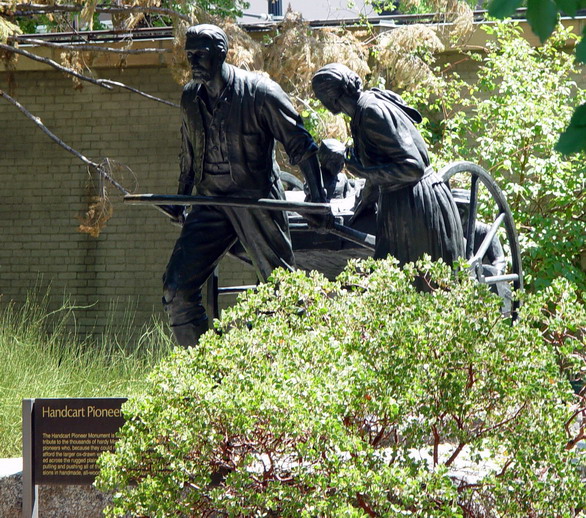
Statue Honoring The Thousands Who Made The Journey Across America

Annie and John Sully

Annie Sully had been given little choice about making the trip to America and the journey west. She had not converted to Mormonism and did not want to give up her own faith but her husband John had converted and he had made the decision to leave London and join the other converts in Iowa. Annie had been quite content with her life in London. Her father had left her a successful gentlemen’s clothing shop which Annie was happy to continue the business with her husband. Annie also had three small children and is pregnant with a fourth child. She is quite concerned with giving birth in a strange country while pushing a handcart across the country for 1,300 miles. Nevertheless, John has sold their business and even given most of their money to the elders of the church so that others can afford to make the trip also. Annie has made the choice to follow John against her better judgment, but she will face many trials, heartache and hardships along the way. But she will also find other women who will love her, and care for her and her family even though she holds steadily to her own faith.

Louisa and Thales Tanner

Louisa Tanner is a newly married young woman whose husband is Thales Tanner, one of the missionary leaders. He is in charge of one hundred of the new converts who will be heading west. Louisa feels she is very lucky to have such an important man as her husband. Along with Louisa, her sister Huldah and her elderly parents will be making the journey west. Not all of them would survive the grueling journey.

Jessie Cooper

Jessie Cooper and Louisa Tanner have always been good friends. Before Louisa married Thales Tanner, he had previously courted Jessie. The two friends did not let this come between them, because truthfully Jessie was happy that Louisa had married Thales. She felt that Louisa was a much better match for Thales. Jessie was sure that when she arrived in Salt Lake City that she would find a husband of her own. Jessie and her brothers Ephraim and Sutter had made the decision to leave their tenant farm in the hopes of finding good fertile land in the Salt Lake Valley. So they sold their small farm and belongings and paid for their passage to America. They met the handcart train in Iowa. Jessie and her brothers were optimist and excited about their future never guessing what hardships lay in store for them. 

The Journey Begins

Near the end of July 1856, the Martin Company of converted Mormons slowly started on the long journey. Everyone was in high spirits and excited to be on their way. Families would walk and push and pull their handcarts which held their meager possessions. Each person was allowed seventeen pounds to be put on their carts but along the way much of their worldly goods would end up being left behind.
The carts were made of green lumber and poorly made. There were no oxen or horses to pull the carts, they would be pulled by human power only.This is the story of these four brave, courageous women as they faced unbelievable dangers, heartbreak, death of loved ones and hardships on their journey. These women would have to learn to help, love and lean on each other. There would of course, be many other members of the Martin Company they would meet and help along the way but these four would become Truly Sisters for the rest of their lives.


Reasons I Recommend Reading True Sisters

  • I truly enjoyed reading True Sisters. I had never even heard of this part of our American history until I read this book. If you enjoy reading about history, this is a great novel
  • The book is well written and the characters well developed
  • It is an emotional story that will tug at your heart. It did mine
  • It is the type of book that will keep you interested from start to finish

Uncategorized

THE DAME ELIZABETH TAYLOR

Born Beautiful

Some people, it seems, are simply born to be beautiful and famous. Elizabeth Taylor was one of those people.

Elizabeth Her Early Years

Elizabeth Taylor, was born on Febuary 27, 1932 in London. She was the second child of Francis and Sara Taylor, and was welcomed home by an older brother, Howard, who was two at the time. 

For the first seven years of young Elizabeth’s life, her family remained living in London, but as fears of World War began to look quite likely, Francis Taylor decided to move his family back to the safety of  Los Angeles, California. Sara Taylor had been an actress herself before marrying Francis Taylor so it was not surprising that after moving back to Los Angeles, she began actively encouraging her young daughter to seek work as an actress.

The Young Actress

It wasn’t long before Elizabeth began to be noticed and in 1943, she was signed on with the Metro-Goldwyn-Mayer studio, which was probably the biggest and the best studio in Hollywood at the time. Liz was cast as the rich Duke’s granddaughter in the highly success “Lassie Come Home”. In 1944, Liz starred in another smash movie “National Velvet” in which she plays a young girl who works with a wild but gifted horse and enters England’s Grand National Sweepstakes. While filming “National Velvet” Liz fell from a horse and broke her back, but she was so committed to her work that she refused to allow this to stop her from finishing the movie. 

Elizabeth loved being an actress. She loved the attention, the clothes, the makeup and the make believe, where she could be whoever her character was at the time. At the young age of fifteen, she was declared “The Most Beautiful Woman in the World”.  As a result, while filming movies such as “Little Women” and “A Place in the Sun” Liz managed to acquire a reputation for being difficult, demanding and needing special treatment. Liz’s face was the cover of about one thousand magazines.

Liz, Romance and Marriage

One of the things that Liz would become famous for would be her many romances and her eight marriages. When Liz was barely 18, on May 6, 1950 she married hotel heir Conrad N Hilton Jr. aboard the Queen Mary. They were divorced a year later. On February 21,1952, she married Michael Wilding, with whom she had two sons and whom she divorced in 1956.  Michael Todd was Liz’s fourth husband. They were married on Februaruy 2, 1957 and had one daughter together. Michael Todd was killed on March 21, 1958, when his private plane crashed in New Mexico, on his way to an awards banquet. After losing her husband, Liz found comfort in the arms of Eddie Fisher, who was married to her friend Debbie Reynolds, at the time. Liz and Eddie Fisher were married on May 12, 1959 and divorced in March of 1964. On March 15, 1964 Liz married Richard Burton, whom she had co-starred with in the film “Cleopatra” with Burton playing the part of Marc Anthony. The couple divorced, then remarried Oct 10, 1975 only to be divorced again in July 1976. Liz’s husband number seven was John Warner, who was running for U.S. Senator from Virginia. They were married on December 4, 1976 in a sunset ceremony on his farm in Virginia. They divorced on December 15, 1981. Liz’s eighth and final husband,  was Larry Fortensky, whom she met while at the Betty Ford Clinic in 1988. They were married in 1991 and divorced in 1996.

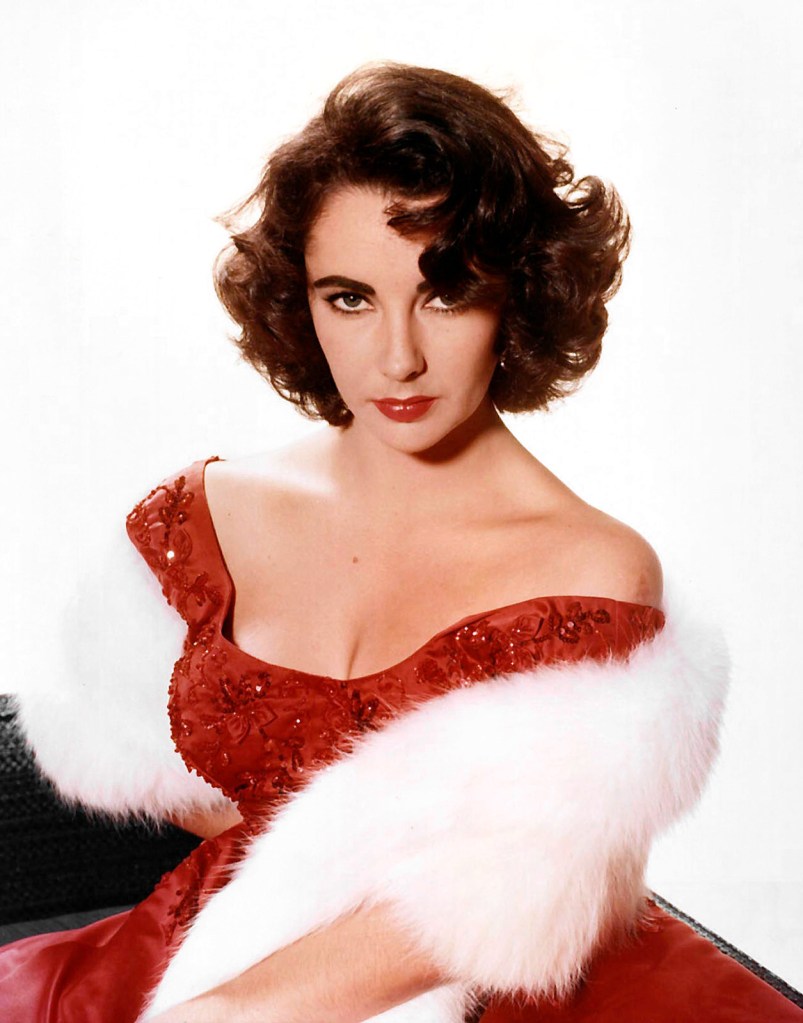
A Young and Very Beautiful Liz Taylor

Awards and Achievements

Elizabeth Taylor is also know for the many awards she received for her work over her lifetime.  “Raintree Country” (1957) earned her the first of several Academy Award Nominations. “Butterfield 8” was her second nomination while “Cat on a Hot Tin Roof” gave her a third nomination. Liz won the best actress Oscar for “Butterfield 8” and another Oscar for “Who’s Afraid of Virigina Woolf”? In 1993 the Academy of Motion Pictures Arts & Sciences gave Liz Taylor a special humnitarian award for her work with the AIDS Foundation. Liz was also honored by the Queen of England and was given the honorary title of Dame.

After losing several close friends including actor Rock Hudson, fashion designer Halston and her own private secretary, Malcom Forbes to AIDS, Elizabeth Taylor became the first great legendary personality to speak out on behalf on AIDS research. In 1985, she became the co-founder and chair of the American Foundation for AIDS research. In 1999 Elizabeth was awarded the Angel Award for her work with patients inflicted with Aids.

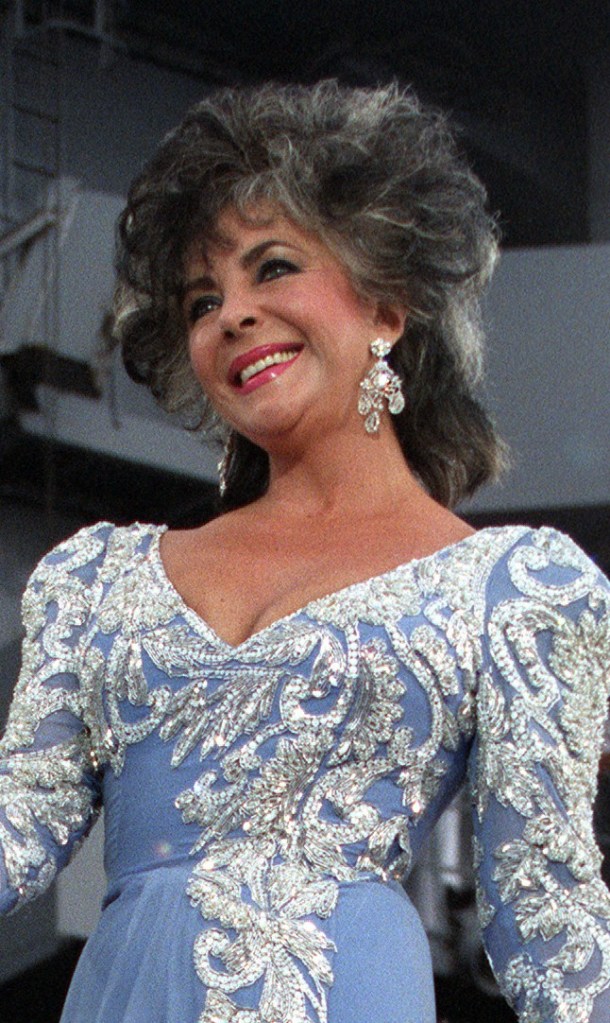
An older but still beautiful Liz Taylor

Queen Elizabeth Honors Liz Taylor

In 2000, Elizabeth visited Buckingham palace with other celebrities where Queen Elizabeth II honored her with the title of Dame. Dame is the female word which is equal to the male term of Knight. This was one of the highest honors given in Britain.

The beautiful Elizabeth Taylor legend will continue and Liz will be remembered for her many husbands, her films, the White Diamonds Perfume, her trips to the Betty Ford Rehab Center and much more. She should always be remembered for her beauty. Perhaps she should be remembered most for the good works she has done in trying to help AIDS victims.