History, Uncategorized, Women and History

The Tragic Life of Catherine of Valois

The Neglected Young Princess

Catherine of Valois was born a princess of France on October 27, 1401. Catherine was the daughter of King Charles VI and Isabeau of Bavaria. She spent her life as a neglected child of this royal couple.

King Charles often suffered from bouts of madness. and was often referred to as “Charles the Mad” or sometimes the Mad King. Meanwhile, her mother, Isabeau of Bavaria, would act as Regent for France in her husband’s place during his spells of madness. Rumors spread that she was much more interested in her young lovers than her children.

Brothers and Sisters

Although King Charles VI and Isabeau of Bavaria had a total of twelve children only a handful of them lived to become adults. Some that did survive died early deaths. Three were given the name Charles and two were named Jeanne after babies that had not lived very long.


  • Jeanne of Valois (two were named Jeanne)
  • Charles (three were named Charles)
  • John
  • Philip
  • Marie of Valois
  • Michelle of Valois
  • Dauphin Louis (brother)
  • Isabelle of Valois (Catherine’s older sister)
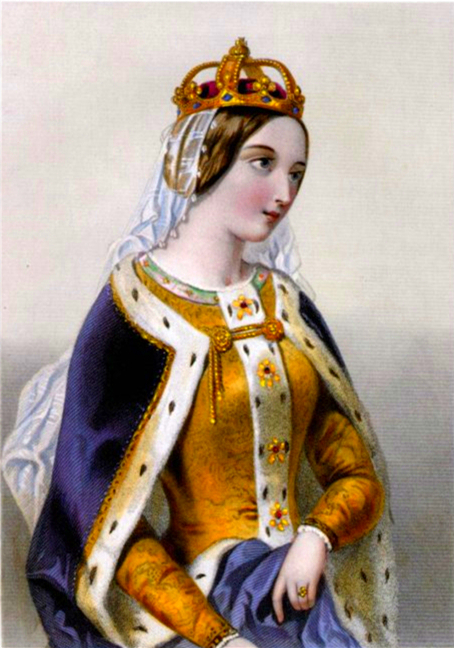
Catherine of Valois

Catherine of Valois

Catherine being the youngest child was probably the most neglected. She faced many challenges due to her father’s madness. Her mother’s lack of interest also affected her life, so she certainly did not live the life of a pampered fairy tale princess. Catherine did spend some of her young life growing up at Poissy Convent which was the basis for her religious education. Catherine was raised understanding that she would be merely a pawn when it came who her future husband would be. There had been negotiations since she was fairly young regarding a possible marriage to the future king of England, Henry V.

I believe that like most young princesses of Europe, she hoped for love and a family with her husband. Yet, her marriage would be to whichever member of European royalty was most beneficial to France.
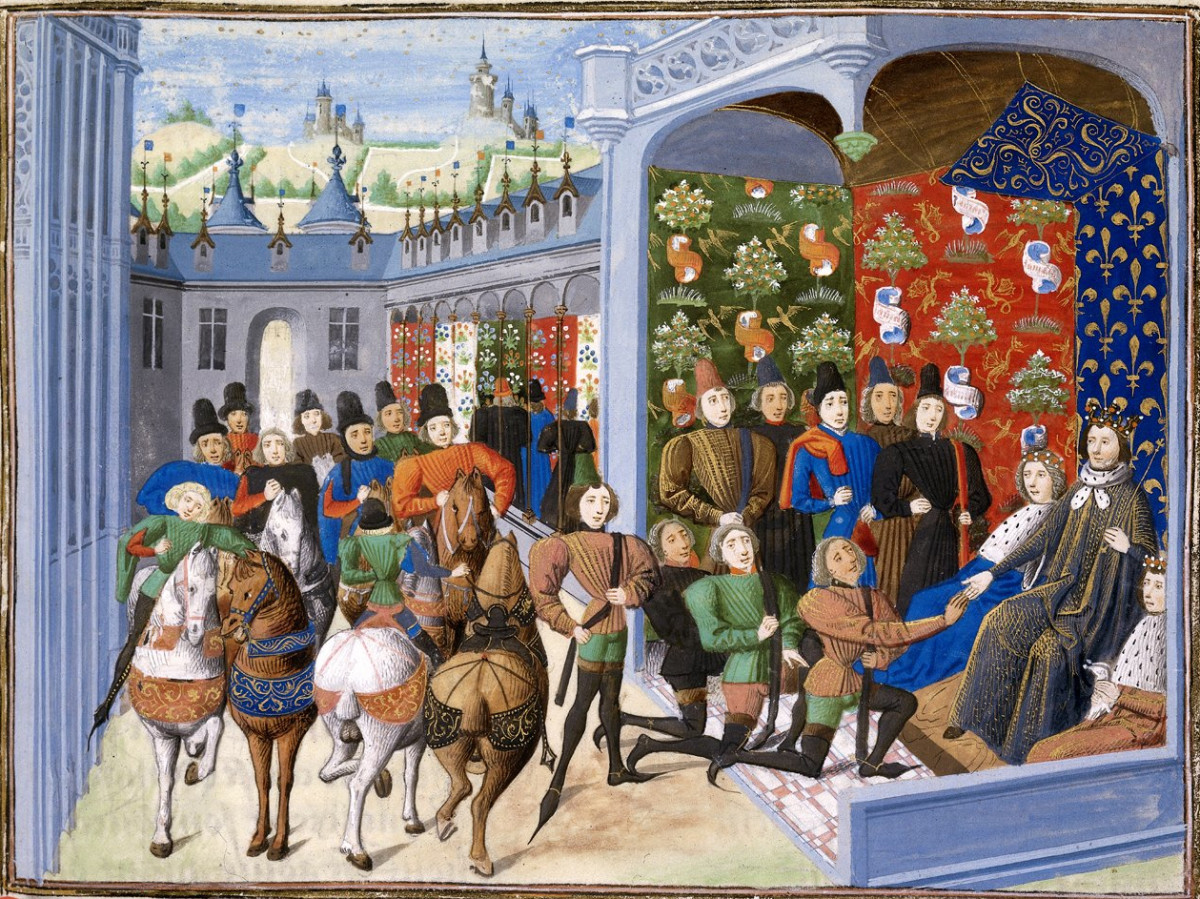
Signing the Treaty for Catherine and Henry's Marriage—Isabeau of Bavaria and Charles VI at the Treaty of Troyes
Signing the Treaty for Catherine and Henry’s Marriage—Isabeau of Bavaria and Charles VI at the Treaty of Troyes | Source

Peace Through Marriage

King Charles VI reign was filled with war (known as The Hundred Year Wars). One effort at achieving peace was through marriage. Isabelle, Catherine’s older sister was married to England’s King Richard at a mere six years of age. The marriage was never consummated due to her young age and the early death of King Richard in 1400. She was held in England for some time after Richard’s death before she was allowed to return to France.

King Henry V

King Henry was a young man when he was crowned the king of England. For much of his father’s reign, the royal English family fought with France. This conflict came to be known as the “One Hundred Years War”. King Henry V signed a treaty with France on May 21, 1420. In the treaty, he demanded the return of lands that had once belonged to England. This was the Treaty of Troyes which also included Henry’s marriage to the young eighteen-year-old Catherine of Valois. A large dowry was also included in the marriage contracts.
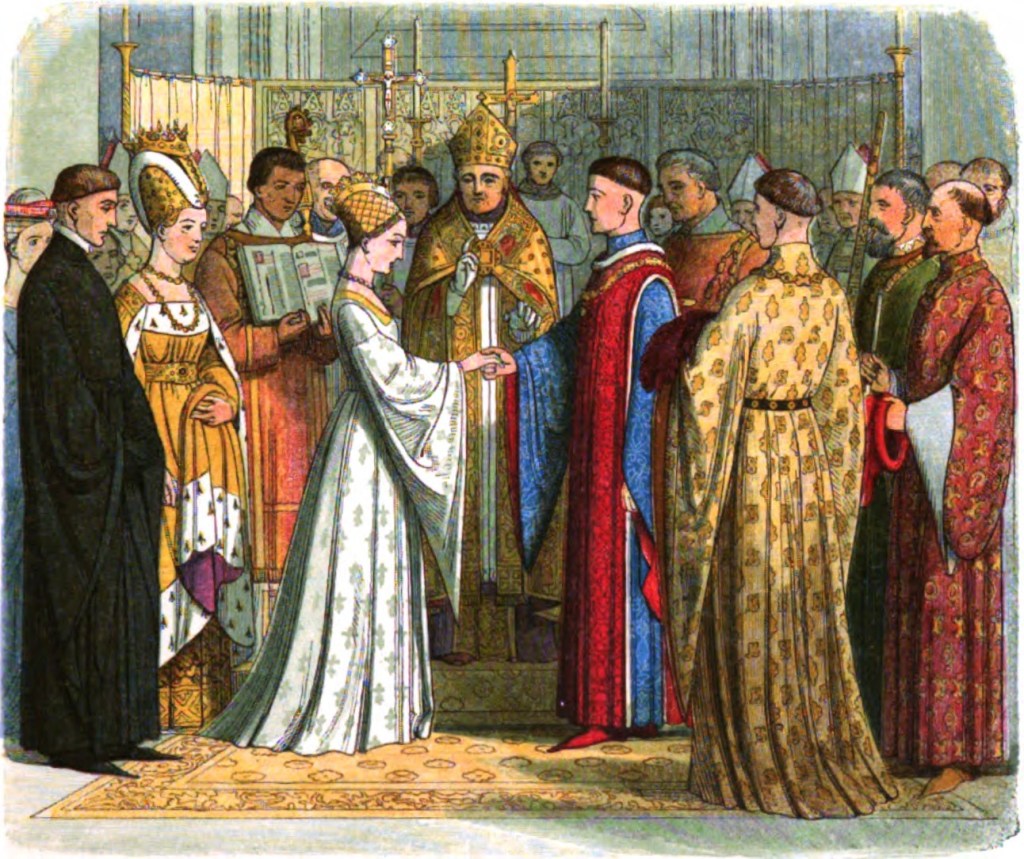
Wedding of King Henvy V and Catherine of Valois

King Henry V and Catherine of Valois were married on June 2, 1420, and Catherine was crowned queen of England in February 1421. The royal couple soon welcomed their only son Henry VI heir to both the English and France thrones. Their marriage proved to be a brief marriage. Henry V died on a battlefield in 1422 leaving a twenty-one-year-old widow and an infant son. Henry VI was only an infant when his father died. His two uncles, the Duke of Gloucester and the Duke of Bedford, controlled the government.

Queen Catherine was sent off to live quietly, at Baynard’s Castle, with only a small household staff. Her brothers-in-laws who were controlling England were concerned that if Catherine were to remarry, any new husband might influence the infant king and they would lose their power over the boy and England.

Forbidden to Love Again

The two dukes and the English parliament had specific ideas on how this young widow should conduct herself. She was also the mother of the boy king Thus they decided how she should be allowed to live her life. Therefore, parliament passed a law that forbade Catherine from establishing romantic relationships and she was forbidden to marry again without parliament’s or her young son’s approval. Any man with a title or lands would lose both his title and his land if he were to marry King Henry V’s widow. No man was willing to take the risk of angering parliament or losing their lands or titles. As her son was only a year old and would not be able to give his consent for years, Catherine’s fate had just been sealed. She would never be allowed to return to France, love again, or have more children to love.

The Queen’s Secret Love

But Catherine was lonely and a very young widow. Catherine was only in her early twenties and wanted to love and marry again. She wanted more children also. However, she was shut away from society in a huge castle with little company other than those who were her servants. She was even deprived of her young son, the future king. Henry had nurses and governesses and was allowed little time with Catherine.

At some time, Catherine met and became involved with a young handsome Welsh gentleman who was in charge of the royal wardrobes. Owen Tudor was in reality a high-ranking Welshman. Thus, the two of them began a secret love affair. Although there seems to be no record of their marriage, and though it was forbidden, Catherine and Owen were secretly married. A marriage that would produce more children for Catherine to love but would also have tragic endings for both Catherine and Owen. When the marriage caught the attention of Parliament, Catherine entered a nunnery and died a short time later. Owen would be captured and imprisoned. Owen eventually escaped prison and served with Catherine’s oldest son King Henry VI but was later captured by the enemies of Henry VI and was beheaded in Hereford marketplace. He was buried in Hereford.

Children of Owen Tudor and Queen Catherine

Owen Tudor an Catherine had several children together but two would play a huge part of English royalty history. Catherine’s oldest son King Henry VI would later make his half brothers and sisters legitimate and bestow them royal titles.

Edmund Tudor 1st Earl of Richmond and father of the future king Henry VII.

Jasper Owen Earl of Pembroke who would help to bring Henry VII the crown of England.

There may have been two daughters and another son named Edward but this is unknown for certain.

Catherine’s grandson would later become king making Catherine the wife of a king, the mother of another king, and the grandmother of the first Tudor king.

References

© 2021 L.M. Hosler

Uncategorized

Tragic Tales of Failed Royal Marriages

Failed Royal Marriages

We often think of Prince Charles and Princess Diana when discussing disastrous royal marriages. Maybe Prince Andrew and Fergie Anderson also come to mind. It’s true those marriages didn’t turn out well, but there were several other royal marriages that also failed. King Henry VIII had five failed marriages before he married his last wife, Katherine Parr.

Several of his marriages ended in divorce, and at least two of Henry VIII’s wife were beheaded. That is really a tragic end to a royal marriage. But then we also have the story of the Prince of Wales and Princess Caroline of Brunswick. Their story is less known, but it is the story of another royal marriage that turned into a disaster.

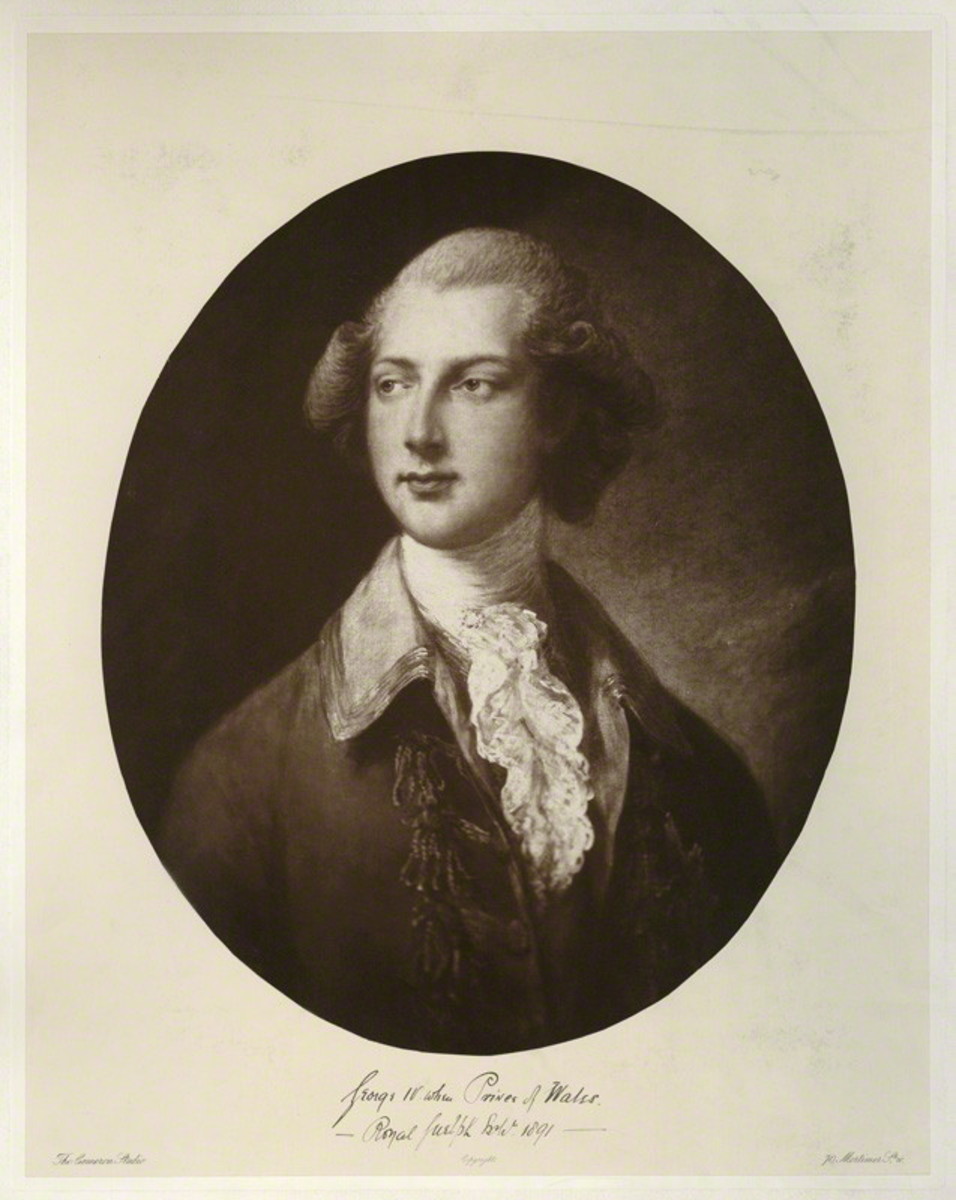
Prince George Frederick Augustus

Prince of Wales, George Frederick Augusta, the heir to the British throne. Known as Prinny to his friends
Prince of Wales, George Frederick Augusta, the heir to the British throne. Known as Prinny to his friends | Source

Prince George Frederick Augustus

Prince of Wales, George Frederick Augustus was born at St. James Palace in London on August 12, 1762. His parents were King George III and Charlotte Mecklenburg Strelitz. He was their first son of fifteen children, although one of those children died at a young age. George, being the oldest, was given the title of Prince of Wales and heir to the throne. George was a charming young man when he wanted to be. He was also rather a handsome sort and well educated to fit his status as the future King of England.

George was very well-dressed and took great pride in being fashionable. George also indulged in heavy drinking, gambling and womanizing. He had at least two relationships with women who were older than he was. One of those women was named Mary Robinson. The other woman was Maria Fitzherbert. He was deeply in love and deeply in debt due to his excessive spending.

The Secret, Not-So-Legal Marriage

George had fallen in love with Maria Fitzherbert. She was a woman who had been married twice to two older men. Both men had left her widowed. George was totally captivated by the young, beautiful woman with light blonde hair and flawless complexion. Maria was a Roman Catholic and a widow, making her an unacceptable wife for a future king. George was a determined young man. He finally persuaded Maria into a secret marriage. It was performed at her house with family members as witnesses.

Neither King George III nor parliament had given approval for this marriage. As heir to the throne, George IV needed approval from both the King and parliament. Without these, it could not be recognized as a legal marriage under English law. Shortly thereafter, Maria was delivered a letter stating that her relationship with the prince was finished. Sometime later, the pair did reunite after he had married and separated from Princess Caroline. Rumors suggested that Maria gave birth to several illegitimate children. These children were rumored to be fathered by Prince George over the years of their relationship.

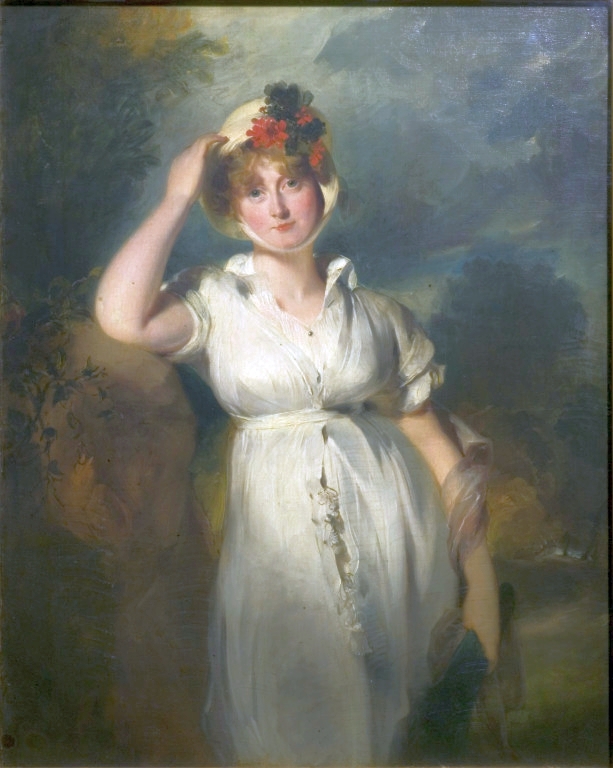
Princess Caroline of Brunswick

Princess Caroline of Brunswick was George’s cousin, although the two had never met. She was the daughter of his Aunt Princess Augusta of England and the Duke of Brunswick-Wolfenbuttel. She was said to be rather bold, coarse, loud and rude in her manner of speaking. Her sense of fashion was almost non-existent. Her clothing was out of fashion and was often worn without proper washing. Her own personal hygiene was also lacking. She neglected to wash properly most of the time or change and wash her undergarments. As a result, she often had an offensive odor.

This is rather strange. A young woman with servants to look after all of her needs would surely have clean, suitable clothing available. Of course, Caroline had her good points as well. She was kind and generous. She was known for her charity work. She loved and fostered several homeless children later in her lifetime.

Princess Caroline of Brunswick

The Prince and Princess Meet

The first meeting of the Prince of Wales and his soon-to-be bride Princess Caroline got off to a very rocky beginning. He did not find her attractive at all. He had no wish to marry anyone at that point in his life. Princess Caroline was also 26, which at that time was considered to be an age unfit to get married. He already had his mistresses to keep him happy. Truthfully, he was repulsed by his future bride. The only reason that Prinny (his nickname) had agreed to marry at all was that he was heavily in debt.

Parliament had agreed to cover his debts if he married, and Princess Caroline was chosen as his bride. Princess Caroline was disappointed. She felt humiliated by the way the Prince had treated her at their first meeting. At a later supper, Caroline was rude. She talked and laughed loudly about subjects that should not have been discussed at the supper table. Perhaps she was just very nervous and insecure at the time. In any event, neither of them made a good impression on the other one.

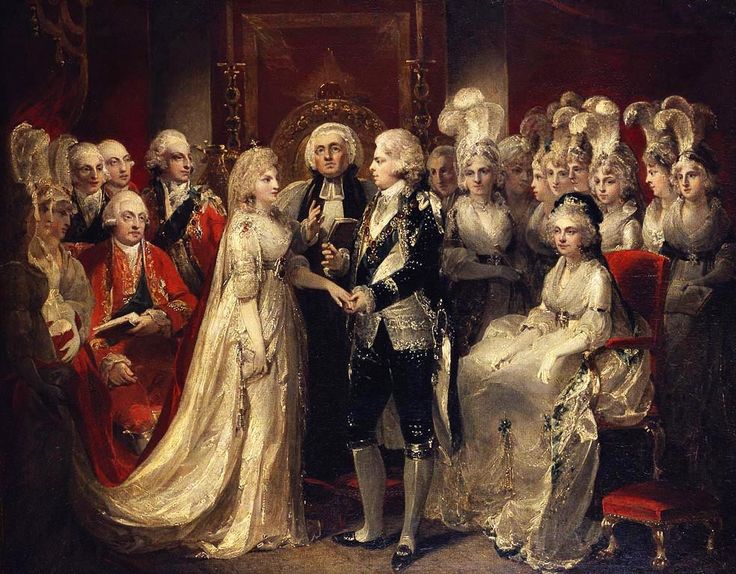
The Wedding

Prince George and Princess Caroline on their wedding day Source: Creative Commons Attribution-Share Alike 3.0 Unported

Prince George and Princess Caroline were married at St. James Palace on April 8th, 1795. His father was delighted to see his son get married. However, it was not a day of happiness for the future king of England. It is said that he was drunk during the ceremony and continued to drink for the rest of the day. When the couple retired to their bed-chambers, George was so drunk that he fell to the floor. He spent his wedding night passed out on the floor.

George managed to do his duty at some time. He had relations with Princess Caroline, who became pregnant almost immediately. With an heir on the way, the prince ignored Caroline completely. Their daughter, Princess Charlotte, was born, and the couple separated soon after. Princess Caroline was forced to leave her infant daughter with her father.

Princess Caroline, the Lonely Queen

Not much more than a year after they were married, Princess Caroline moved out of her husband’s residence. She took up residence at Blackheath, London. How lonely the new Princess of Wales must have felt in a foreign country with few friends of her own. Blackheath was located to the southeast of London and was a wealthy area. Here, the estranged wife of the Prince of Wales was lived with fewer restrictions. At BlackHeath her behavior and activities sometimes caused scandals.

One of those scandals was when she took in an infant, and some people whispered that she was the mother. This incident caused King George to form an inquiry into her activities. Although the inquiry proved she was not the mother of the infant, the king no longer welcomed her. She was not allowed in his household anymore.

After losing the king’s support, Princess Caroline left England and traveled throughout Europe. She created more scandals with a handsome young Italian servant that she had employed. Imagine the scandal they caused as they traveled together. Despite the scandal this may well have been the happiest time of Caroline’s life. Sometime during Caroline’s years abroad, several things changed. Her only daughter, Princess Charlotte, married Leopold George Christian Frederick, became pregnant and died in childbirth. Her husband, Prince George, had also taken over as Regent for his father, who was mentally unstable.

Caroline Returns to Be Queen but Is Put on Trial

In 1820, King George III died, officially making the prince, King George IV and Caroline the Queen of England. She returned to England and expected to be crowned queen alongside her estranged husband. Now king, George refused to have Caroline crowned as his queen. Instead, he wanted to be rid of her and needed grounds for a divorce. At his insistence, parliament put her on trial. They claimed she had committed adultery with her Italian man servant, Bartolmeo Pergami. They also accused her of other indiscretions.

Much like Princess Diana and Prince Charles’s public divorce, this one also had everyone in England engaged. The princess had her supporters publicly supporting her cause, and the prince had his own supporters. Unlike modern-day royal dramas, the only thing missing was television and social media.

Eventually, parliament ruled in favor of Princess Caroline. King George was denied his divorce. A divorce would have allowed him to remarry and produce another heir to the throne.

The Final Insult to the Queen

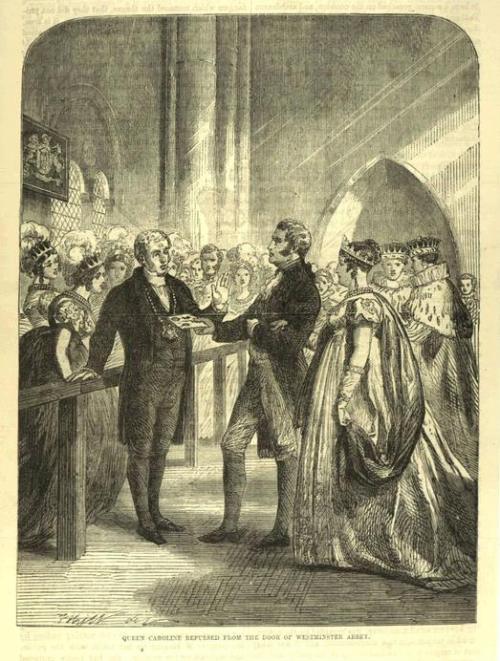
By rights, Princess Caroline, still legally married to King George III, was now queen even if the marriage was a total disaster. She expected to attend the king’s coronation and be crowned queen alongside her husband. But the king would not allow her to be crowned with him. He left orders that she would not be allowed to enter Westminster Abbey, where the coronation was taking place.

Caroline showed up to the coronation anyway but was refused entrance into Westminster Abbey. Basically, the door was shut in her face. Therefore, she was never officially crowned Queen of England. Princess Caroline of Brunswick later became the Princess of Wales and was the uncrowned queen of King George III. She died within a few short weeks after receiving the final insult from a disastrous royal marriage.

King George IV served as his father’s regent from Feb 5, 1811 until he was crowned King O England Jan 20, 1820. George served as king until his death on June 26, 1830.

Queen Caroline attempts to enter Westminster Abbey for King George IV coronation but is refused entry.